
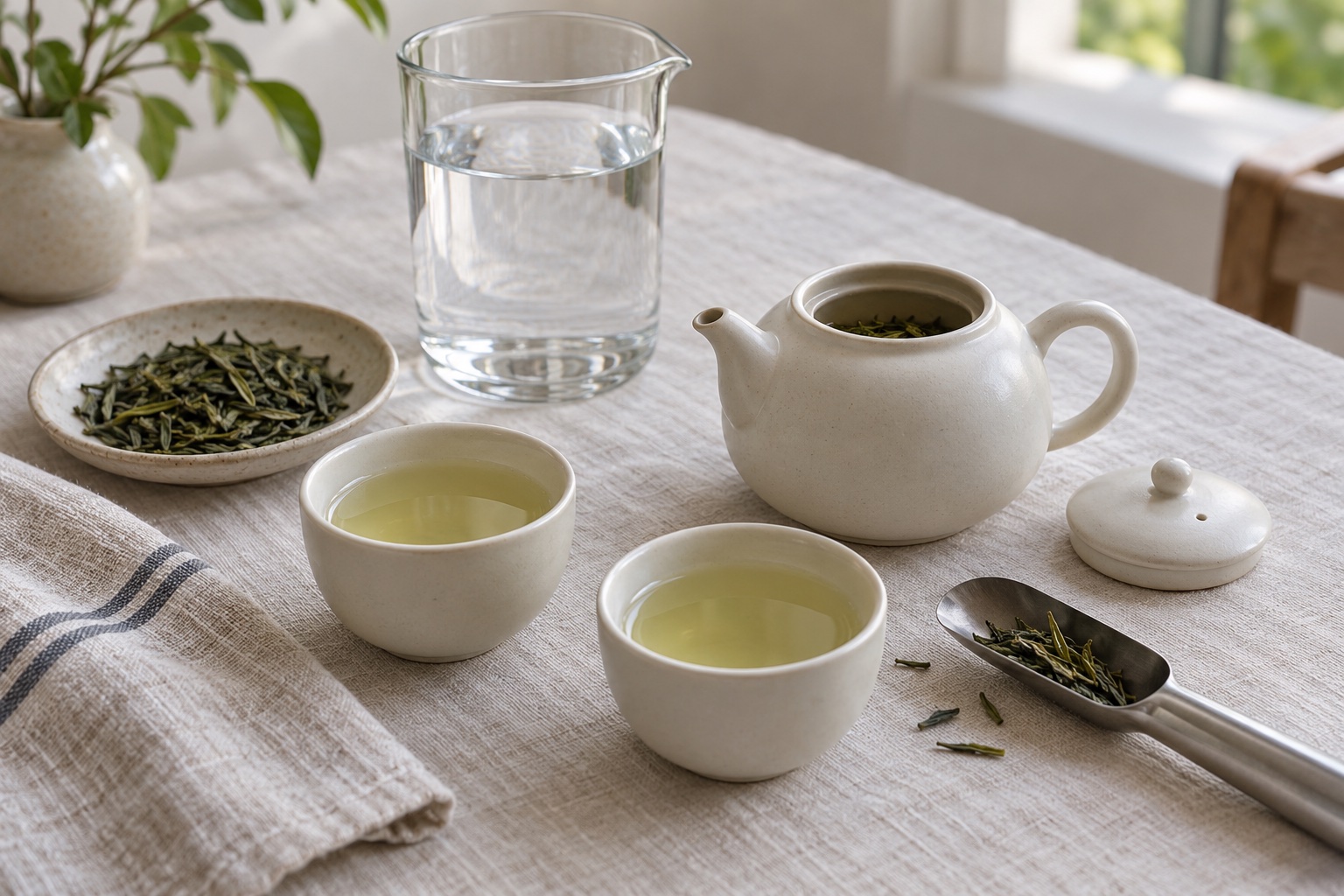
Taste two teas side by side and write what you notice before reading the seller's tasting notes. Use familiar words: fresh grass, toasted grain, broth, flowers or something else you can recognize. “I cannot name it” is also a useful note. You do not need to invent an impressive description to complete the sheet.
Choose the question first. Comparing two teas under the same recipe answers how they behave in that recipe. Preparing each according to its own recommended method answers which finished cup you prefer. Those are different experiments, so write the method at the top of the page.
Keep the comparison manageable
Use two teas at first. Label the cups A and B and keep their identities on a separate note if you want to reduce the influence of packaging or price. Brew in comparable vessels with the same water, or document any difference you cannot avoid.
Measure leaf, water, temperature and time. Pour into cups that are similar in shape and color. Let the tea cool enough to taste comfortably; hot liquid can obscure the comparison and burn your mouth. Smell the cups and take small sips at roughly the same stage of cooling.
A blind label does not turn a kitchen tasting into a scientific trial. It simply removes one obvious cue. Your preferences can change with food, mood, tea freshness and preparation. A second session is useful if the first result would change an expensive purchase.
Separate sensation from preference
Record bitterness and drying mouthfeel separately. You may like some dryness in one cup and dislike it in another. Likewise, an intense aroma does not automatically mean a more enjoyable tea. Give intensity a score and preference a different score rather than assuming every stronger sensation is better.
Palais des Thés' tasting terminology distinguishes sensory terms and provides examples for describing tea. Use vocabulary as a prompt, then choose the words that fit your own cup. A seller's note is a description to compare with your experience, not an answer you must reproduce.
For the simple scales here, 0 means absent or not noticed and 5 means very strong. Preference uses 1 for “would not choose again” and 5 for “would choose again.” Do not add the intensity scores into a quality total. That would reward bitterness and dryness whether you liked them or not.
Write one actionable observation
After scoring, write a sentence that could change the next brew: “A feels too drying at this steep time,” or “B's aroma is easier to notice after cooling.” These are examples of note format, not reported results from a tasting conducted for this article.
If you want to alter the recipe, change one value on the next run. A shorter steep with the same leaf and water gives a clearer comparison than changing all three. Keep the original result in the notebook so the successful revision has something to compare with.
Finish with a purchase or brewing choice
Record whether you would drink the tea plain, with food or in a recipe. A cup you would not choose first on its own may suit the way you actually use tea. Note the package's opening date and batch information if available. Repeat the comparison with fresh notes rather than copying your previous scores into the next session.
When repeating the tasting, use the same water; the green tea water comparison helps you plan a separate water test without mixing it into the leaf comparison.
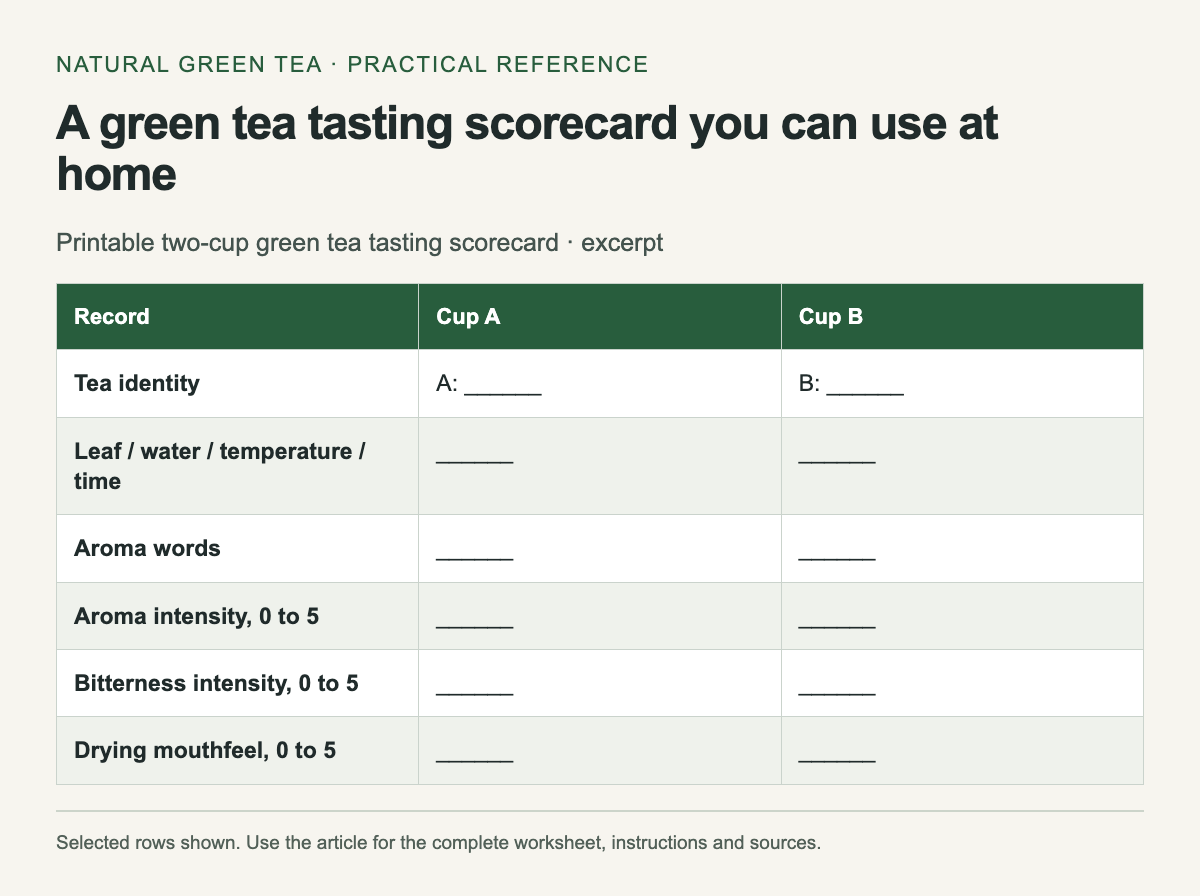
| Record | Cup A | Cup B |
|---|---|---|
| Tea identity | A: ______ | B: ______ |
| Leaf / water / temperature / time | ______ | ______ |
| Aroma words | ______ | ______ |
| Aroma intensity, 0 to 5 | ______ | ______ |
| Bitterness intensity, 0 to 5 | ______ | ______ |
| Drying mouthfeel, 0 to 5 | ______ | ______ |
| Preference, 1 to 5 | ______ | ______ |
| Next brew change | ______ | ______ |
Related tea guides
- Why Does Green Tea Smell Like Seaweed? Taste, Freshness and What to Check
- Why Is My Green Tea Bitter? How to Make a Gentler Cup
- Best Water for Green Tea: Tap, Filtered or Bottled?
Sources

No comments:
Post a Comment