
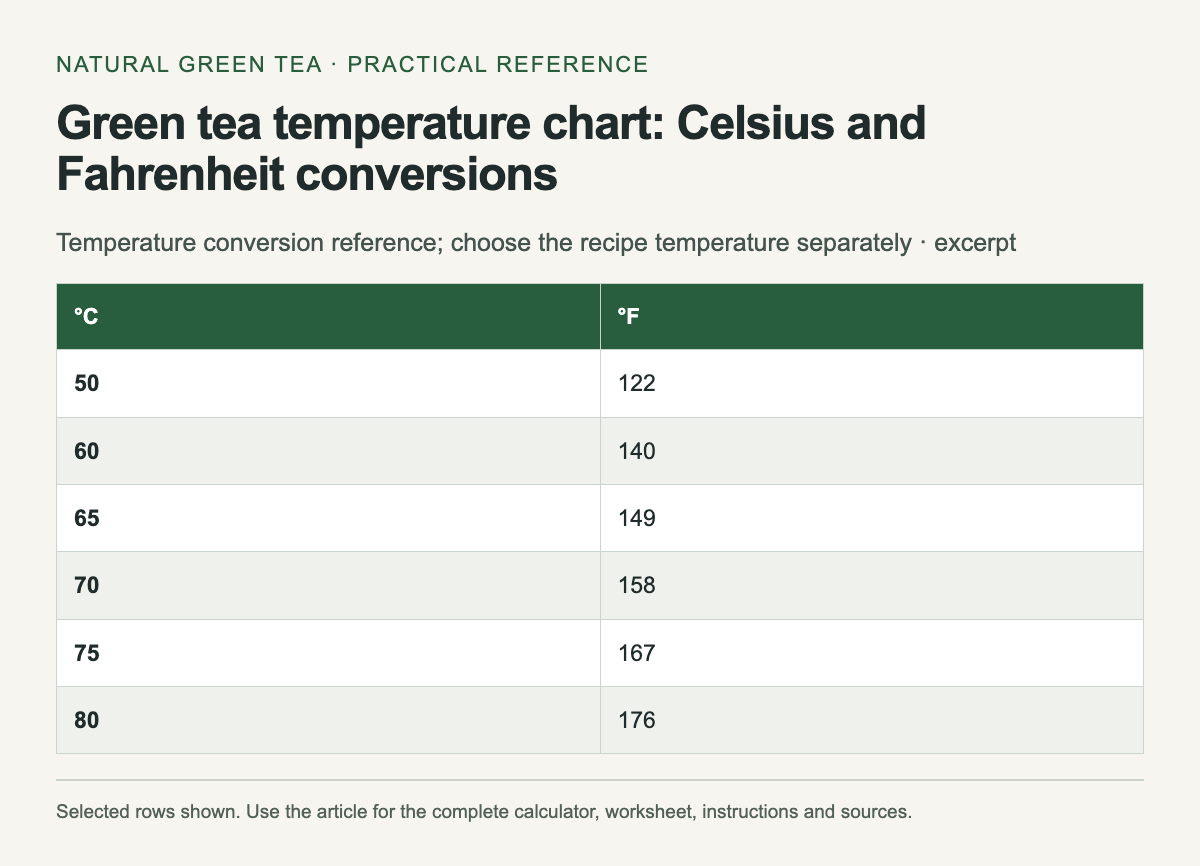
Convert the temperature printed on your tea recipe before choosing a kettle setting. The formula is Fahrenheit = Celsius × 1.8 + 32. An 80°C recipe therefore calls for 176°F. A setting of 180°F is close, but it is a different temperature, about 82.2°C.
Use the recipe for your tea as the starting point. This chart translates units; it does not assign one brewing temperature to every green tea. Tea style and preparation method matter, and a temperature used for an iced concentrate may differ from one used for a small hot serving.
Read the label as a whole recipe
Temperature sits beside leaf quantity, water volume and steep time. If you borrow one number from a concentrated sencha recipe and combine it with a much smaller leaf dose and a longer steep, you have created a new recipe. That may taste good, but the original instructions no longer predict the result.
Write the original temperature and the converted value in the brew log. Keep units beside every number. A handwritten “80” is clear while the package is beside you and much less clear when you find the note several months later.
The conversion equations come from NIST's temperature-unit reference. To convert the other way, subtract 32 from Fahrenheit and divide by 1.8. For example, (175 − 32) ÷ 1.8 = 79.4°C, rounded to one decimal place.
Choose the nearest useful setting
If a kettle has only broad presets, choose a setting you can repeat and record it. Do not pretend it is identical to the recipe temperature. A 175°F preset is approximately 79.4°C and is closer to 80°C than 185°F, which is 85°C.
The kettle's display also has its own measurement limits. Check the manual for how it controls and reports temperature. Water can cool as it moves into another vessel, so the kettle setting is not automatically the temperature at the leaves. Preheating or changing the vessel can alter the setup you are trying to repeat.
Measure at a consistent place
If you use a thermometer, follow its instructions and keep its sensing area correctly immersed without touching the vessel in a way that distorts the reading. Measure at the same stage each time, such as immediately before water reaches the leaves. Use equipment intended for food and the temperatures involved.
A conversion calculator cannot correct a poorly placed thermometer or a kettle with a different operating behavior. Keep the method simple enough that you will actually repeat it. A consistent approximate setup is more useful for your own taste adjustments than a precise number measured differently on every brew.
Keep brewing and drinking separate
A recommended brewing temperature is not a recommendation to drink the liquid immediately at that temperature. Let the cup cool to a comfortable temperature before tasting. Take particular care when handling hot water around children or when pouring into small vessels.
For side-by-side comparisons, taste the cups at a similar cooling stage. Otherwise a change you attribute to the recipe may come partly from serving conditions. Write down any deliberate cooling or dilution step.
Use the table for common recipe temperatures and the calculator for other values. If you do not have temperature-controlled equipment, the site's separate brewing-without-a-thermometer guide covers practical approximation; this page keeps the unit conversion explicit.
When selecting equipment, compare kettle temperature controls and small-batch features against the recipes you actually use.
| °C | °F |
|---|---|
| 50 | 122 |
| 60 | 140 |
| 65 | 149 |
| 70 | 158 |
| 75 | 167 |
| 80 | 176 |
| 85 | 185 |
| 90 | 194 |
| 95 | 203 |
| 100 | 212 |
Calculate your result
Values stay in this page. The worked example also works without JavaScript.
Related tea guides
- How to Brew Green Tea Without a Thermometer
- Best Kettle Features for Green Tea: Temperature Control and Small Batches

No comments:
Post a Comment