
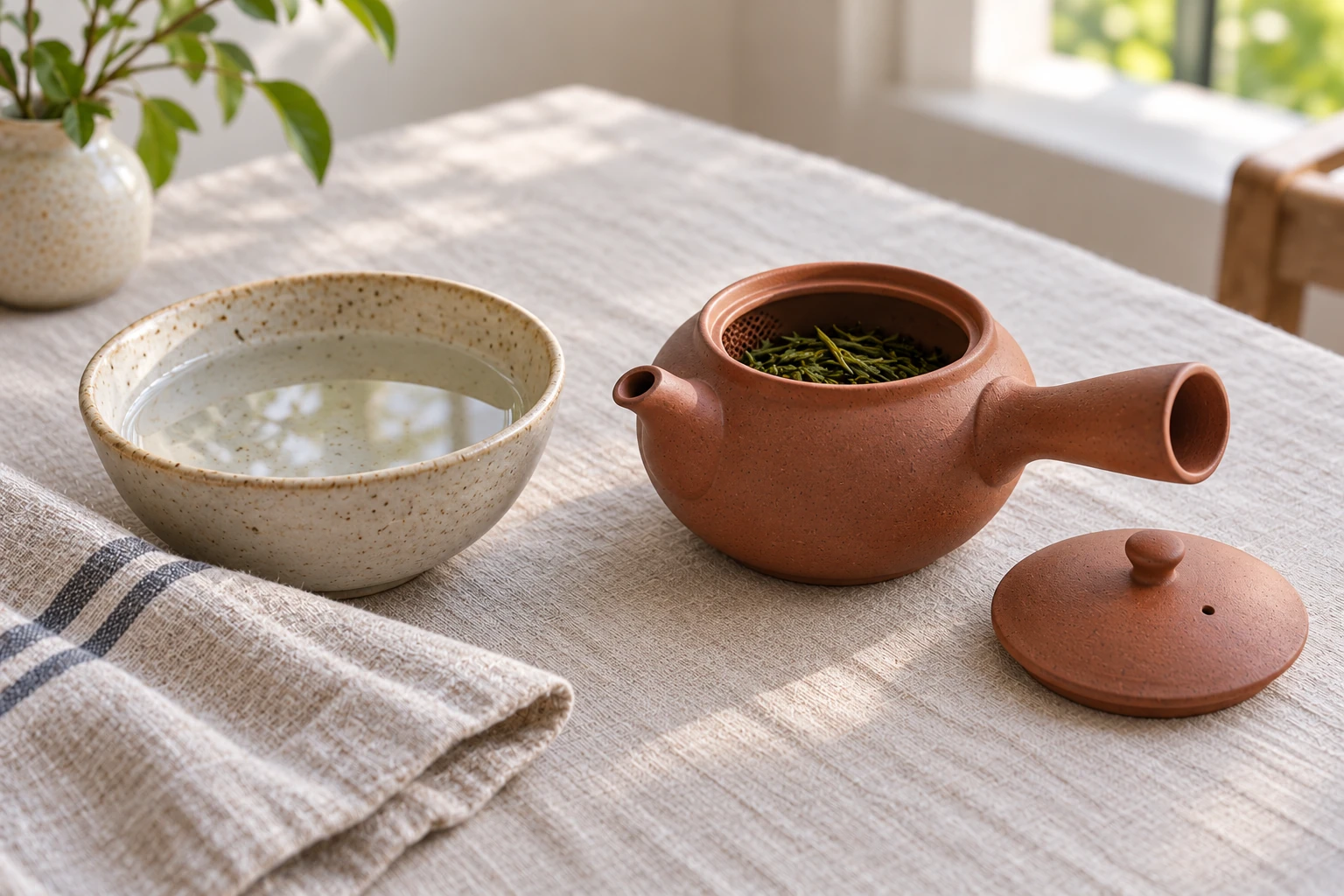
Empty the leaves when your tea session ends, rinse the pot as its maker directs and let it dry before storing it. The exact care method depends on the pot's material, finish and filter construction. Identify those details before using detergent, abrasives or a dishwasher.
A side-handled Japanese teapot may be glazed porcelain, unglazed clay or another material. The familiar shape does not tell you what cleaning treatment it can tolerate. Keep the manufacturer's care information with the product name so a later cleaning question does not begin with a guess.
Start with the everyday routine
For its kyusu, Ippodo recommends discarding leaves, rinsing with water, wiping with a clean cloth and allowing the pot to dry. It also describes brown tea staining from regular use as normal for those pots. That advice is specific to the utensils it discusses; check the instructions for yours.
Place the pot securely while emptying it. Avoid knocking a delicate spout or handle against the sink. Rinse leaves out through the large opening rather than trying to push a packed mass through the spout. Keep the lid safe on a soft, stable surface while you work.
Inspect the filter area in good light after rinsing. Loose leaf fragments are easier to see when the pot is empty. Follow the maker's instructions for clearing a built-in filter; do not pry at a mesh or ceramic strainer with sharp metal tools.
Give drying a real place in the routine
Leave the pot and lid in a position where they can dry, consistent with the maker's care directions. Closing a wet vessel and putting it in a cupboard hides moisture from view. Use a clean drying area where the spout and handle will not be knocked by other dishes.
Before the next use, inspect the inside and smell the empty pot. A persistent unfamiliar smell or visible residue deserves investigation before brewing again. Do not assume every mark is harmless patina merely because ordinary tea stains are common.
Check before trying a stronger treatment
Look up the exact model's instructions if rinsing does not remove the problem. Contact the maker if the material or care method is unclear. A cleaner recommended for glass may be unsuitable for an unglazed pot or a metal filter component.
Do not combine cleaning chemicals or improvise a treatment from several unrelated tips. Avoid abrasive pads, boiling, soaking, dishwasher use or strong cleaners unless the manufacturer permits them for the whole vessel. A teapot may contain more than one material, and every component needs to tolerate the method.
Prevent flavor carryover where it matters
Ippodo notes that using its kyusu for strongly scented teas or tisanes can leave an aroma. If you want to compare delicate green teas, using the pot consistently for those teas can simplify the comparison. A separate vessel for strongly flavored drinks may be convenient, but it is a preference and care decision, not a requirement to buy more equipment.
Record what was brewed before a new smell appeared. That note can help distinguish a lingering flavor from an unexplained change. If the source remains unclear, stop using the pot until you have reliable cleaning guidance.
Keep a care card
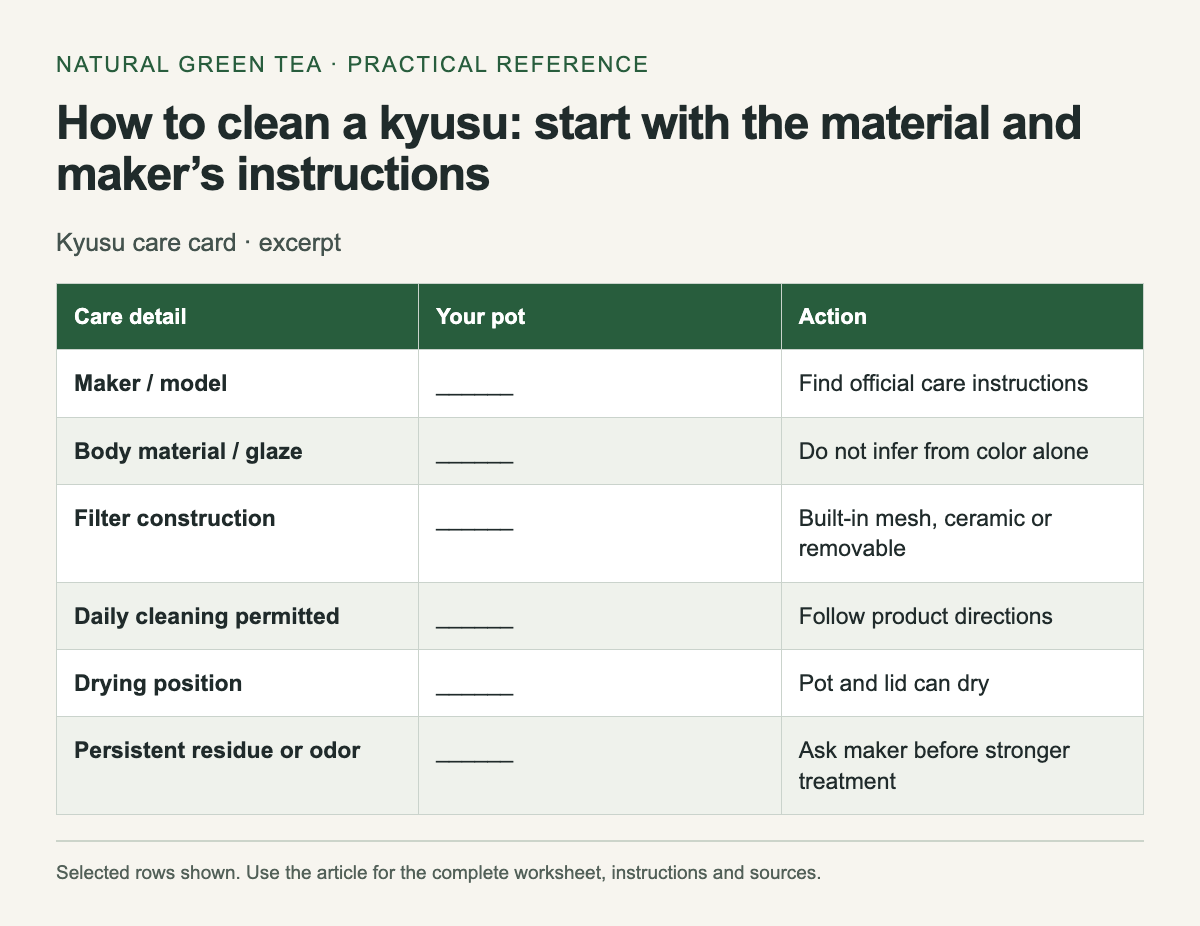
Write down the material, maker, model, filter type and permitted cleaning method. Add a link to the official instructions. The worksheet below leaves room for those details without prescribing one universal cleaning recipe. Replace the pot or damaged component when the maker's advice indicates it cannot be cleaned or used safely.
A removable basket is a different cleaning setup from a built-in filter. The infuser basket comparison helps identify the parts that need separate attention.
| Care detail | Your pot | Action |
|---|---|---|
| Maker / model | ______ | Find official care instructions |
| Body material / glaze | ______ | Do not infer from color alone |
| Filter construction | ______ | Built-in mesh, ceramic or removable |
| Daily cleaning permitted | ______ | Follow product directions |
| Drying position | ______ | Pot and lid can dry |
| Persistent residue or odor | ______ | Ask maker before stronger treatment |
| Damage / loose component | ______ | Stop and assess before brewing |
Related tea guides
- Tea Infuser Basket vs Tea Ball: Which Works for Green Tea?
- How to Use a Gaiwan for Green Tea: A Beginner’s Guide
- Why Does Green Tea Smell Like Seaweed? Taste, Freshness and What to Check

No comments:
Post a Comment