
Choose one matcha latte recipe, measure its powder, water and milk, then scale all three by the same factor when you want a larger drink. Increasing only the milk changes the balance. Increasing only the powder changes it in another direction.
A useful recipe record includes the type of milk and any sweetener. Two drinks with identical liquid volumes can taste different when those ingredients change. Keep the first comparison simple by using the same matcha, milk and preparation method.
Start with a named recipe
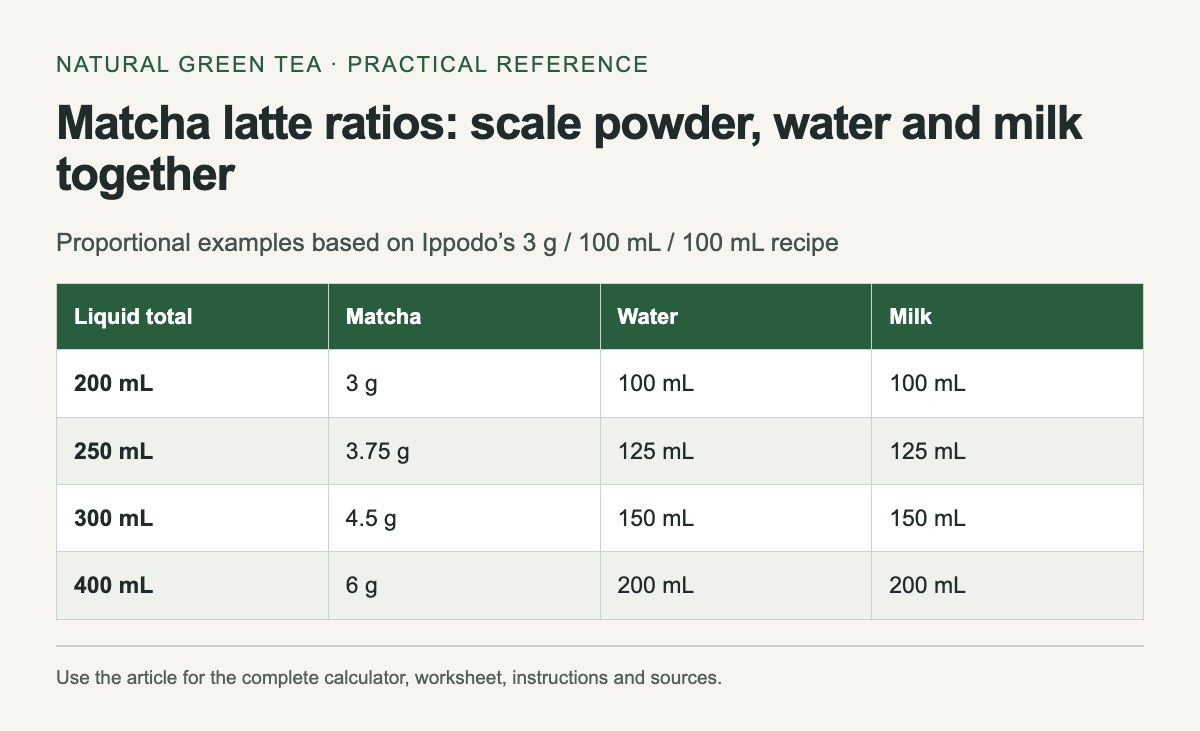
Ippodo's matcha latte recipe uses 3 g matcha, 100 mL water at 80°C and 100 mL milk. It sifts and whisks the matcha before adding the milk. That gives a clear reference for the calculator, although you can enter a different recipe you already enjoy.
The liquid total in that example is 200 mL before allowing for foam and the small effect of suspended powder. A target of 300 mL therefore uses a scale factor of 1.5: 4.5 g powder, 150 mL water and 150 mL milk. This is a proportional scaling example, not a claim that everyone needs that much matcha in one drink.
Separate size from balance
To change size while retaining the recipe proportions, multiply every ingredient by target liquid volume ÷ original liquid volume. To change balance, keep a written record of the new proportions. For example, reducing the milk while keeping matcha and water fixed makes a smaller drink with a different milk share.
Do not compare a small cup filled to the rim with a larger cup filled halfway and assume appearance reflects concentration. Use measured ingredients. A tall narrow glass can make the same drink look larger than a broad mug.
Account for foam and ice
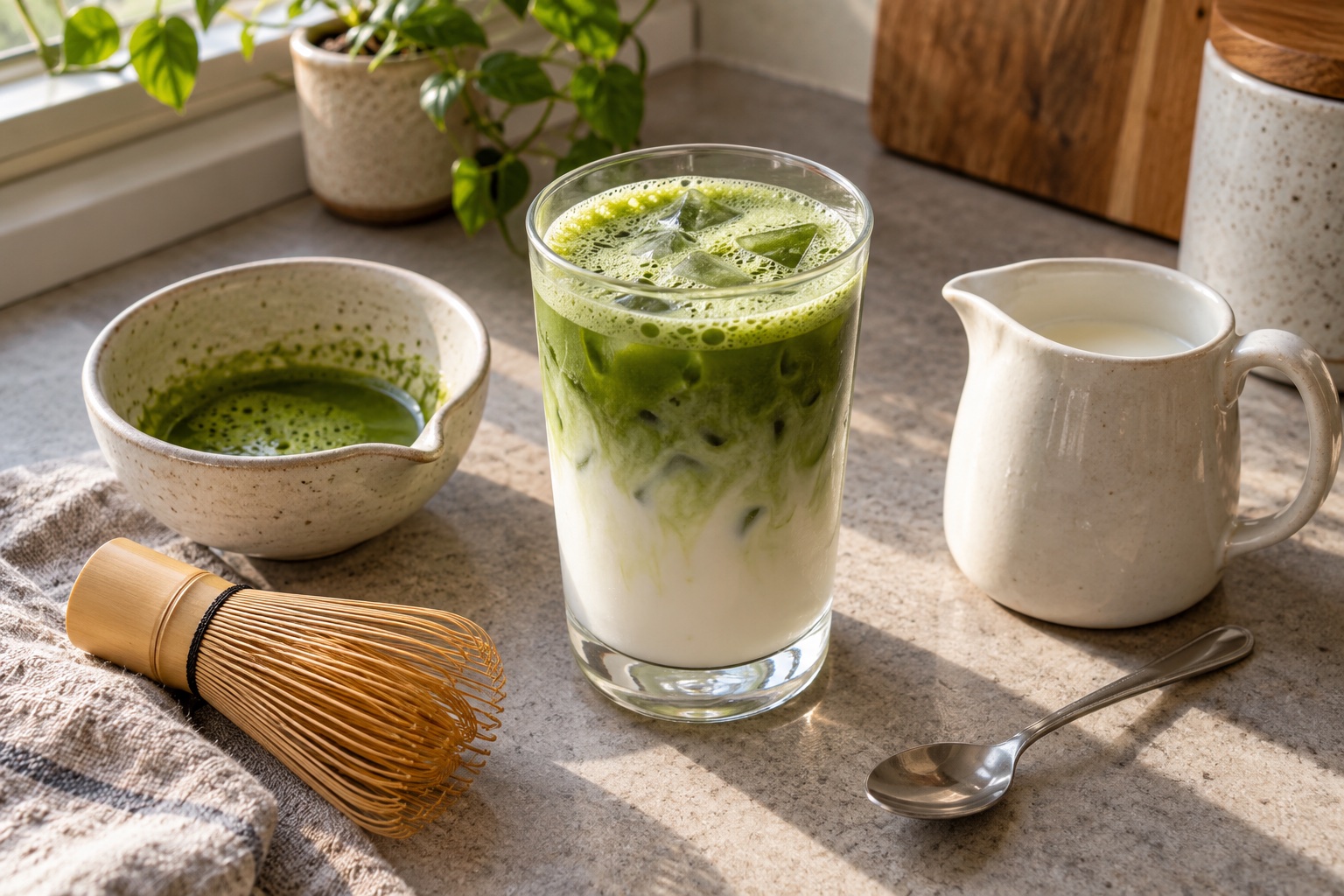
Foam takes up space without adding the same volume of liquid. Leave headspace in the mug and measure milk before frothing if you want a repeatable recipe. The calculator reports the sum of the unfoamed water and milk; it does not predict the final foam height.
For an iced latte, ice occupies space and adds water as it melts. Record the ice mass or a repeatable ice portion separately. Taste at a similar point after mixing when comparing trials. A drink tasted immediately and one tasted after fifteen minutes may have different dilution even though they began with the same recipe.
Fix texture before changing strength
Sift clumpy powder and prepare it according to the recipe before adding the rest of the liquid. A few lumps can make one sip taste much stronger than the next. Use a suitable open vessel and whisking method; do not shake hot liquid in a sealed container.
If the texture is smooth but the drink is too mild, adjust a single ingredient next time. If it is too drying or bitter, check the matcha and recipe before adding more sweetener automatically. The site's matcha-grade guide can help distinguish the product choice from the quantity calculation.
Keep the useful version
Write the recipe you actually finished, including powder grams, water, milk, sweetener and ice. Add one preference note. A recipe that suits your usual cup and milk is easier to repeat than a collection of unmeasured spoonfuls.
The calculator does not estimate caffeine or prescribe a daily amount. Its purpose is ingredient scaling. Use the ingredient information and any relevant advice you already follow when deciding how large a serving you want.
If the ratio tastes right but powder remains in lumps, follow the clumpy matcha troubleshooting steps before adding more liquid.
| Liquid total | Matcha | Water | Milk |
|---|---|---|---|
| 200 mL | 3 g | 100 mL | 100 mL |
| 250 mL | 3.75 g | 125 mL | 125 mL |
| 300 mL | 4.5 g | 150 mL | 150 mL |
| 400 mL | 6 g | 200 mL | 200 mL |
Calculate your result
Values stay in this page. The worked example also works without JavaScript.
Related tea guides
- Why Is My Matcha Clumpy? How to Get a Smoother Cup
- Ceremonial vs Culinary Matcha: Which Powder Do You Need?
Sources

No comments:
Post a Comment