
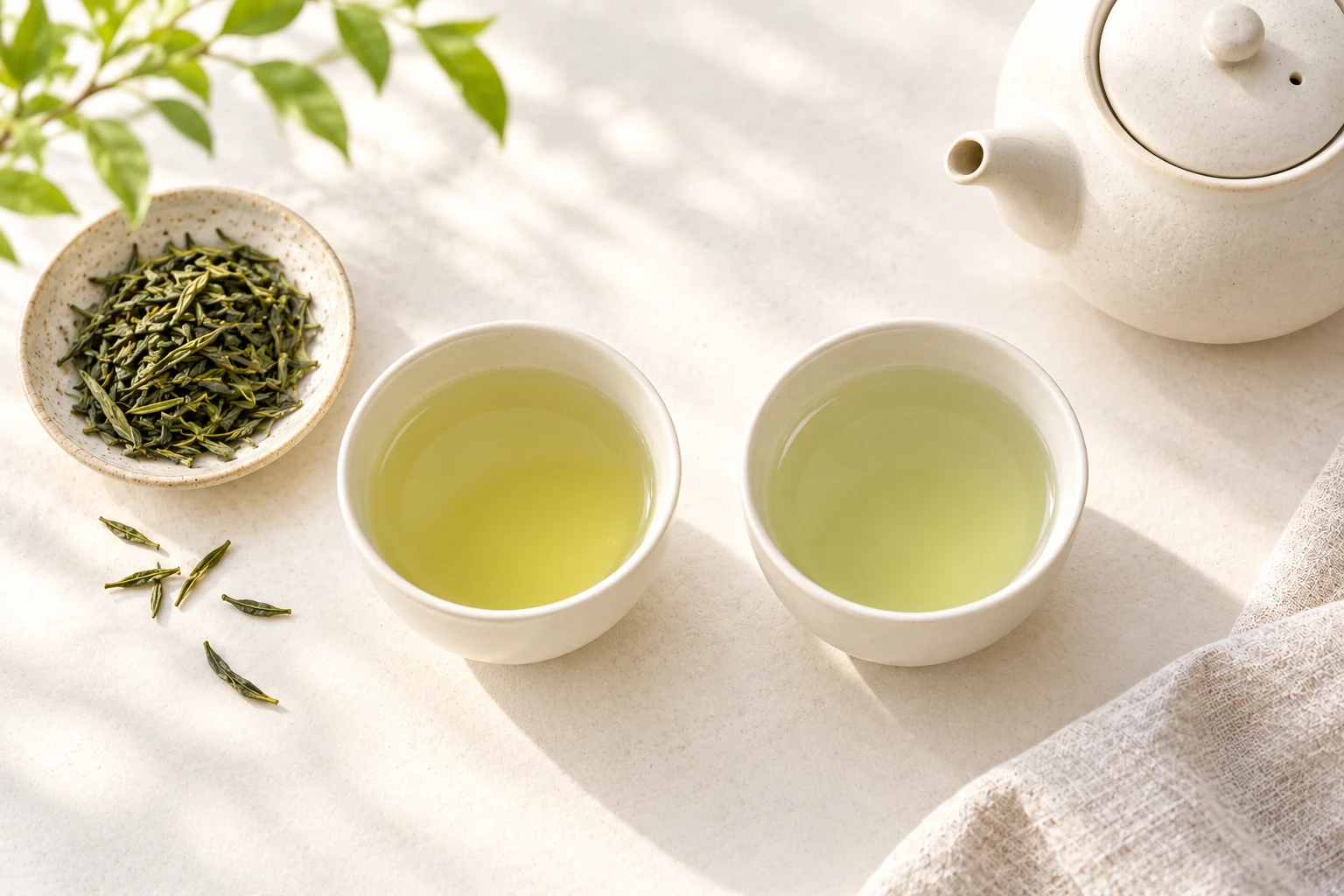
Kabusecha is Japanese green tea shaded before harvest; standard sencha is generally grown without that covering. Kabusecha is worth trying if you want to explore a mellower, more savory direction. The name alone does not tell you exactly how a packet will taste or how to brew it.
For a first comparison, I would buy a small kabusecha packet and compare it with a sencha you already know. Choose a seller that explains its tea and gives a complete brewing recipe. If your usual sencha already tastes too heavy, a richer shaded tea may not be the change you want.
What the names tell you
Nakamura Tokichi describes kabusecha as covered for around seven to ten days and places its flavor between sencha and gyokuro. It describes a milder character than sencha and explains that brewing temperature changes the balance. These are producer descriptions, not tasting results from the cups pictured here.
Do not turn one producer's shading period into a universal rule. Hagimura's tea guide describes kabusecha shading as one to two weeks. For a particular purchase, the producer's information is more useful than trying to infer an exact number of days from the category name.
d:matcha's sencha explanation describes the familiar steaming, rolling and drying process and distinguishes standard open-sky cultivation from briefly shaded tea. You may therefore see kabusecha described as shaded sencha. Read the growing description alongside the product name.
| Question | Kabusecha | Sencha |
|---|---|---|
| What cultivation detail matters? | Covered before harvest; ask about the specific tea. | Standard sencha is generally unshaded; check whether the seller specifies otherwise. |
| What flavor direction might appeal? | A producer-described mellow, savory profile. | A producer-described refreshing profile with some briskness. |
| Which recipe should I use? | The packet's leaf, water, temperature and time instructions. | The same four details from its own instructions. |
| Can color identify the category? | Do not use a photograph as proof. | Check the label and cultivation description. |
| How much should I buy first? | A small packet that allows several attempts. | A familiar reference tea, or another small packet. |
Compare the teas without wasting the packets
You need the two teas, clean brewing equipment, similar cups, a timer and a way to measure leaves and water. Use the same water source. The first comparison should help you choose what you enjoy drinking; it cannot isolate the effect of shading from every other difference between two products.
- Write down each tea's name and its recommended recipe. Include leaf mass, water volume, temperature and infusion time.
- Brew each tea using its own directions. Use separate clean equipment, or clean and reset one pot between preparations.
- Pour the infusion into its labelled cup when the stated time is reached. Keep track of which tea is which.
- Taste at a comfortable drinking temperature. Write a short observation in your own words: for example, whether the finish seems drying or the savory character is pleasant.
- Choose one tea for a second attempt. Keep the dose, water amount and time the same while changing only one setting within the seller's guidance.
- Record whether the adjustment helped. Keep the packet if you like the result; its brewing information is your reference for another session.
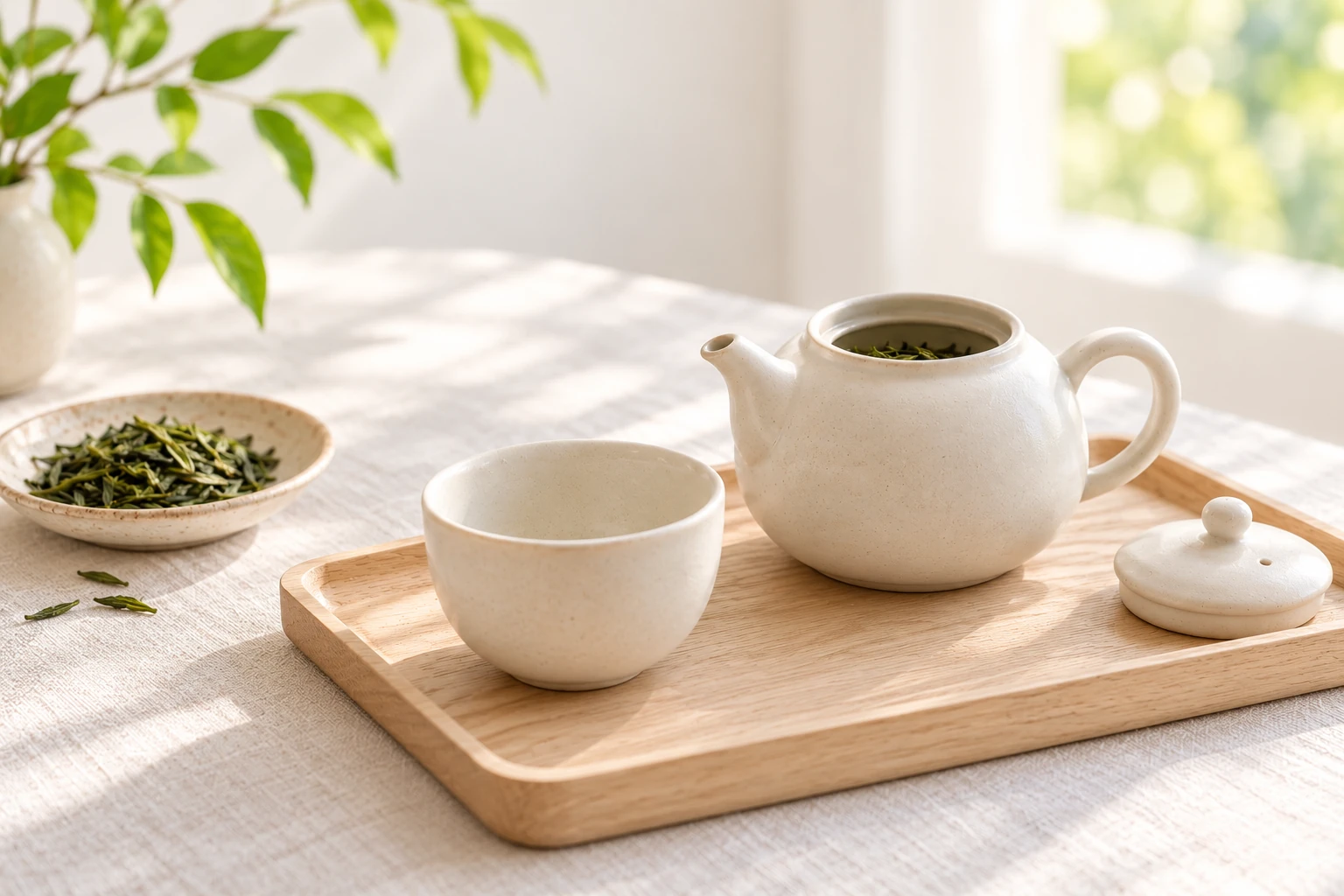
Keep recipe examples attached to their source
Hibiki-an's sencha recipe uses 7–8 grams of leaf, 200 milliliters of water at 80°C and one minute. That is one seller's starting recipe, not a rule for every sencha and not a kabusecha recipe. If your packet gives different directions, begin there.
For kabusecha, Nakamura Tokichi specifically suggests adjusting water temperature to explore its balance. A cooler or warmer cup is an experiment with that tea; it does not prove that one whole category is better. Avoid changing leaf quantity and temperature together if you want to understand what helped.
Choose the next purchase from the cup you liked
If the kabusecha's savory direction appeals, ask for another small packet with a similar producer description. If you prefer the sencha's briskness, keep buying sencha without treating that as a compromise. Check the actual price per gram and how much leaf your preferred recipe uses before deciding which tea costs more per brew.
A useful note can be as short as the tea name, your recipe and whether you would brew it that way again. Use the tea tasting scorecard for your observations, or the leaf-to-water calculator to scale a recipe you already like.
Original editorial illustration.

No comments:
Post a Comment