
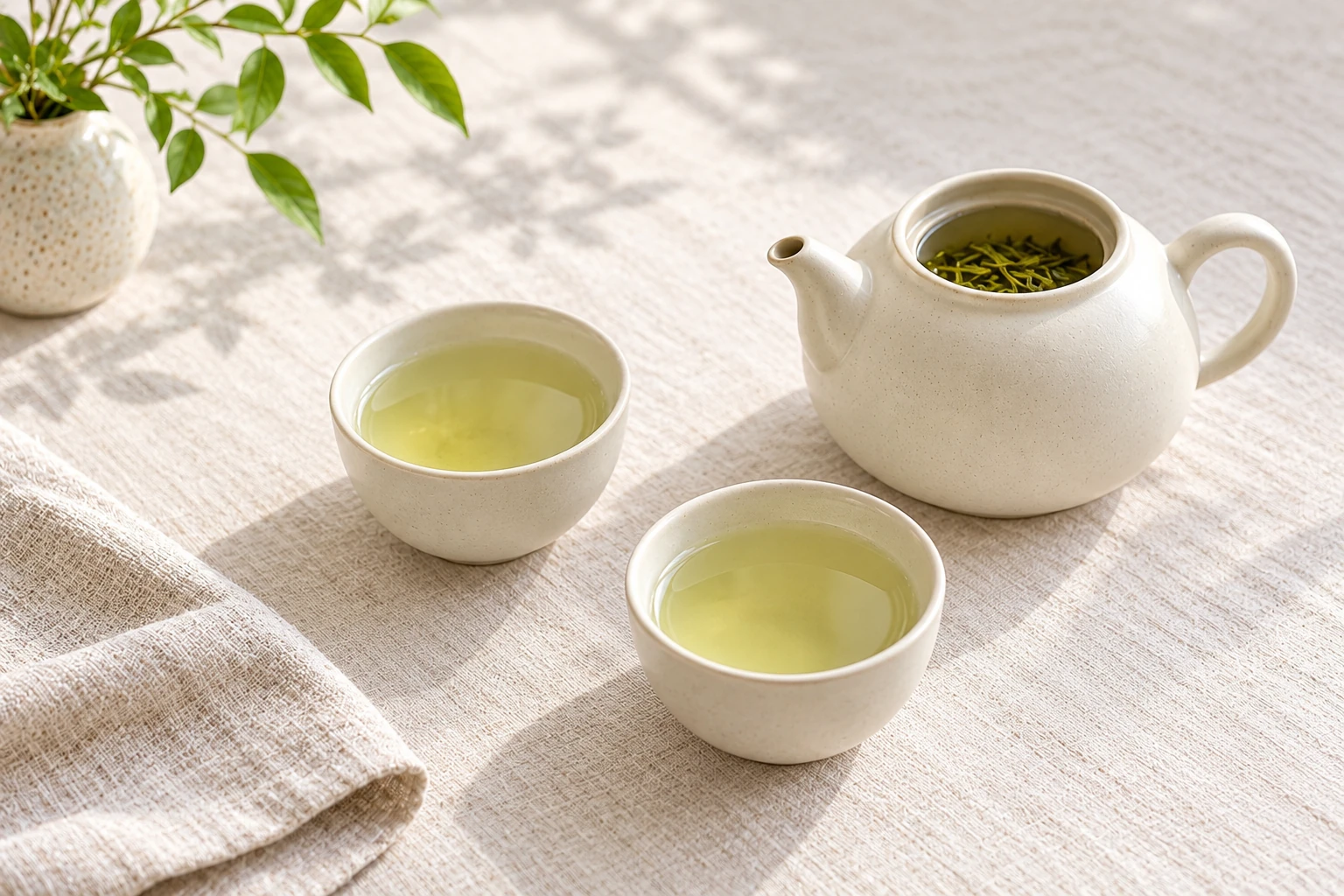
Bancha and sencha are Japanese tea names, but the label “bancha” needs a little more reading before you buy. It can appear on a straightforward green tea or within a seller's wider family of everyday teas, including roasted or rice-blended styles. Compare the actual ingredients and processing on two packets before deciding which one you want.
For a first purchase, I would choose small packets with clear descriptions and brewing directions. If your aim is to compare green-leaf bancha with sencha, leave roasted tea and rice blends for a second tasting. If you already know you want a toasted aroma, those styles may be the more useful purchase.
What does bancha mean on the packet?
Ippodo describes bancha as tea made from larger leaves from the same plants as sencha. Its category includes yanagi, a green-leaf tea; genmaicha, with roasted rice; and hojicha, made by roasting. This is a useful example of how a shop groups its products, rather than a promise that every bancha will look or taste alike.
Japan's Ministry of Agriculture tea guide also treats bancha, genmaicha and hojicha together in part of its brewing guidance and notes that their contents vary. That is why a comparison based only on the two large words on the bag can be misleading.
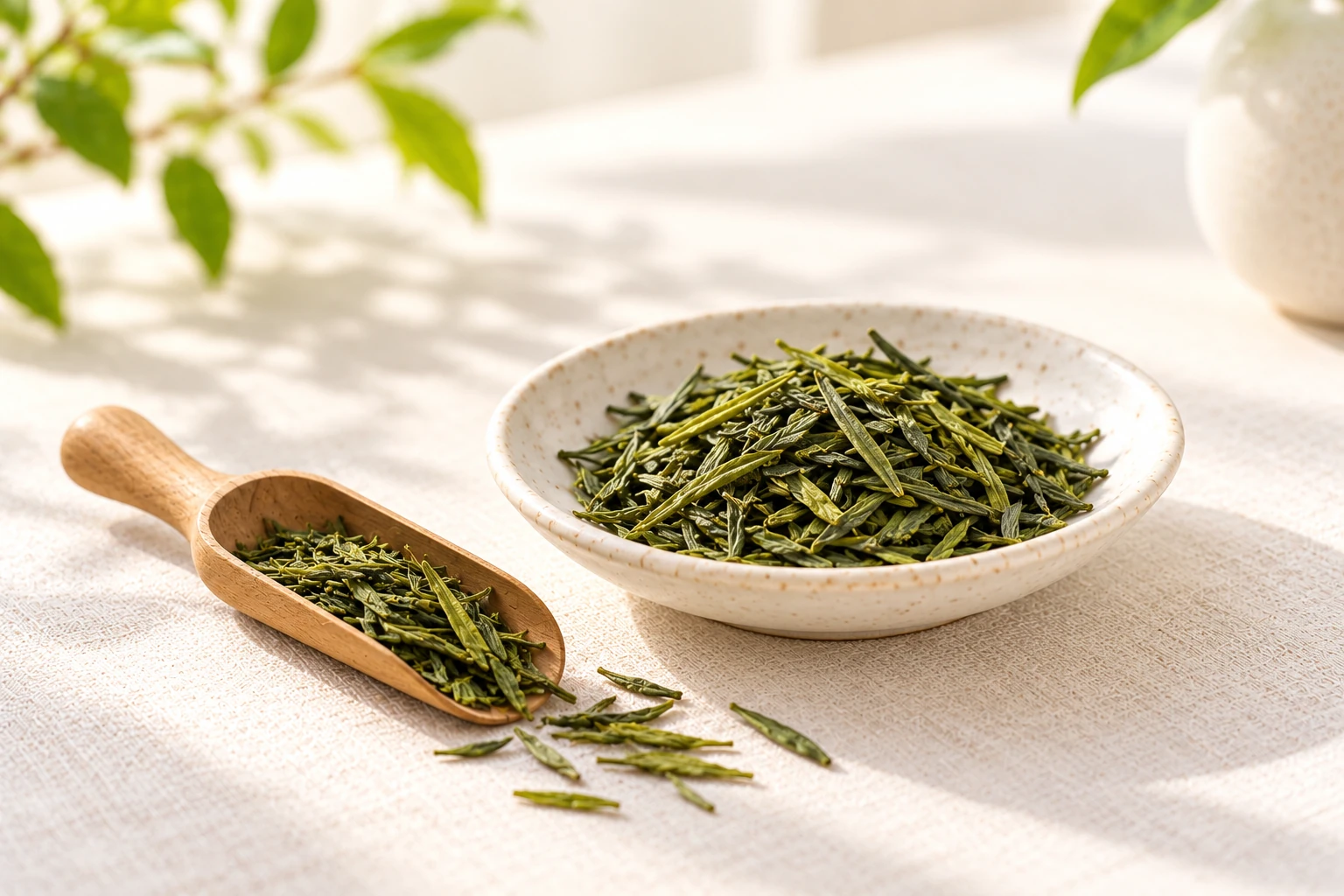
| Question | Bancha packet | Sencha packet |
|---|---|---|
| What exactly is it? | Look for green-leaf, roasted or regional style information. | Check whether the producer specifies ordinary or deep steaming. |
| What is in it? | Check for rice, stems and other ingredients. | Check the ingredients rather than assuming every product is plain leaf. |
| How should it be brewed? | Use the directions for that named product. | Use its own leaf dose, temperature and time. |
| What will it cost to try? | Compare a small packet and its stated serving dose. | Compare the same packet weight or calculate cost per brew. |
| What will the comparison tell you? | Your preference for that product at that recipe. | Your preference for that product at that recipe, not all sencha. |
Use each tea's recipe for the first comparison
Giving both teas boiling water for the same length of time may sound fair, but it can ignore the preparation the maker intended. Start with each packet's directions, write them down, and judge the cups you would actually drink. Later you can run a controlled comparison at one shared recipe if that answers a specific question.
For example, Ippodo recommends boiling water for its bancha family to bring out aroma. That is producer-specific guidance. The ministry's sencha guidance distinguishes preparation temperatures by the tea, so there is no single temperature that settles every bancha-versus-sencha comparison.
Compare two small brews, step by step
You need the two packets, a scale, a timer, a way to measure water, a suitable pot or infuser, and two similar cups. A thermometer or temperature-controlled kettle helps you repeat a recipe. Keep the packet instructions beside the equipment.
- Write the full product names and ingredients on a sheet. Include roasting or rice blending if listed. Label the cups A and B so they do not get swapped.
- Record the maker's dose, water volume, temperature and time for each. Scale quantities proportionally if necessary, using a vessel that still gives the leaves room.
- Brew the first tea and decant it fully. Clean the brewing vessel before the second tea so residual leaves and aroma do not carry across.
- Prepare the second tea to its own recipe. Let both cups cool to a comfortable drinking temperature before comparing.
- Write one concrete observation about aroma, one about the feeling in your mouth and one about whether you want another sip. “Too drying for my preference” is more useful than a number with no explanation.
- If you want to adjust a tea, change one variable on the next brew and record it. Keep the other recipe details the same.
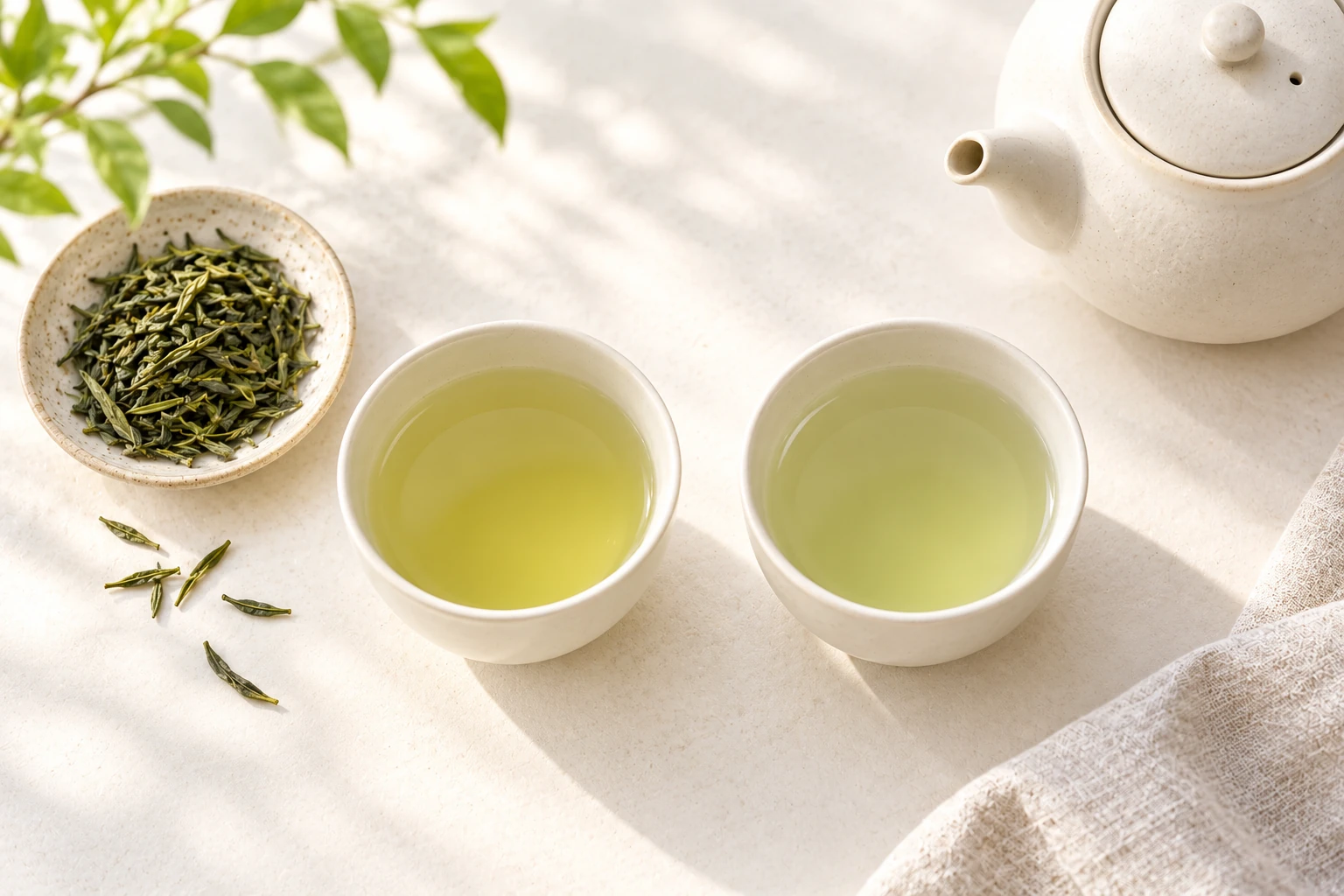
A filled comparison note you can copy
Here is a practice example, not a tasting report: “A: plain green-leaf bancha, packet recipe followed. B: sencha, packet recipe followed. Both cups comfortable to sip. I prefer A with lunch today; B feels too drying. Next brew: shorten only B's steep and keep its dose, water and temperature unchanged.” Replace the observations with your own. You do not need specialist flavor words to make the note useful.
Keep any price comparison equally specific. A larger bag can have a lower price per gram yet be a poor first purchase if you dislike the tea. I would pay attention to the smallest useful trial size before committing to a pantry supply.
When another comparison is more helpful
If the bancha you chose is roasted or contains rice, read hojicha versus genmaicha for that distinction. To keep a repeatable record over several sessions, use the green tea tasting scorecard. Keep the full product name on every entry so an opinion about one packet does not turn into a rule about an entire category.
Original editorial illustration.

No comments:
Post a Comment