
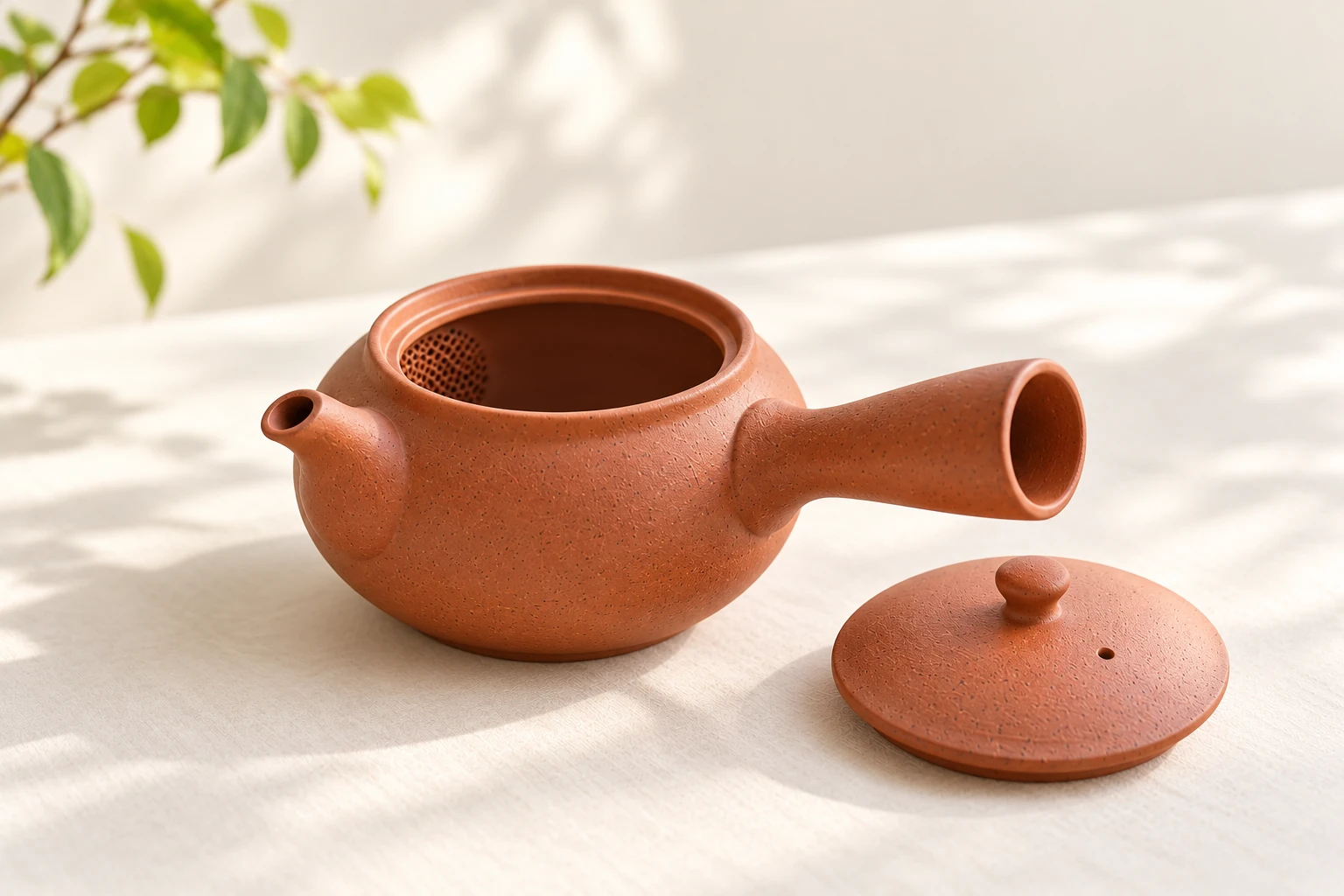
Choose a kyusu for the amount of sencha you actually brew and the size of its leaf particles. Look inside the pot before judging its colour or handle: the filter, opening and usable volume determine much of the everyday work.
I would buy a modestly sized pot with a clearly described filter before paying extra for decorative details. If you mostly drink finely broken, deep-steamed sencha, ask the seller whether that exact filter suits it. If you make large mugs of several different teas, an easy-clean glazed pot with a roomy removable basket may be more convenient.
Start with the filter arrangement
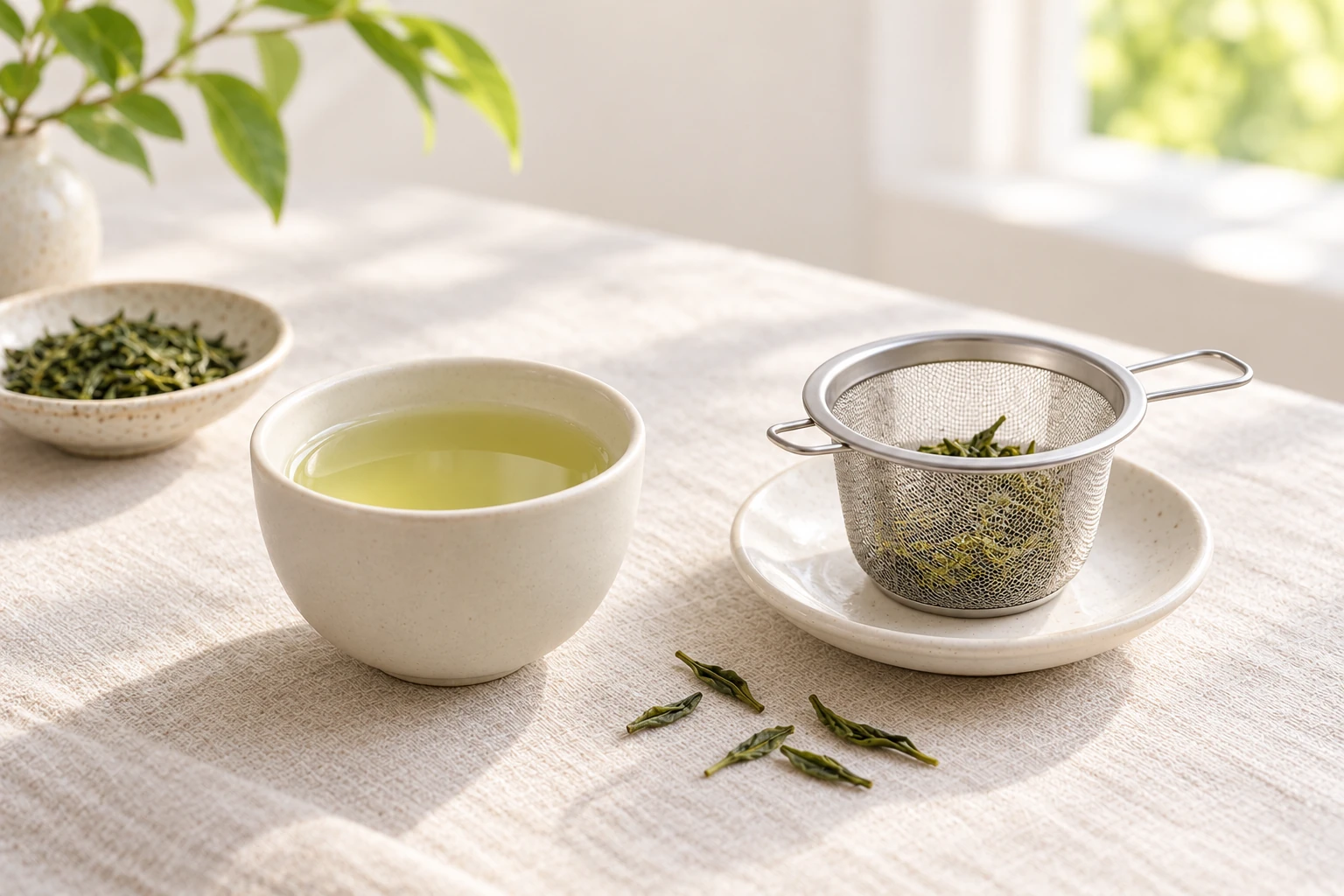
Ippodo's teapot guide describes a fine filter at the spout that lets leaves spread through the pot while they brew. That arrangement differs from keeping all the leaves inside a removable basket. Neither arrangement alone tells you the fineness of the filter or how easy the pot will be to rinse.
A concrete example is Hibiki-an's 360 ml kyusu, which has a fine mesh filter at the base of the spout and is described for small leaves such as fukamushi sencha. Treat that as information about the listed product, not a claim that every metal filter behaves identically.
| Feature | Ask or inspect | Why it matters |
|---|---|---|
| Filter | Is it ceramic, fixed mesh or a removable basket? Is there a clear interior photo? | You need to know where leaves collect and how to rinse that area. |
| Tea suitability | Does the seller mention fine, broken leaves? | A pot sold for large leaves may not suit your usual sencha. |
| Capacity | Is the listed volume measured to the brim or at a practical fill? | The number on the listing may exceed your comfortable brewing volume. |
| Opening | Can you reach the inside for the maker's recommended cleaning? | A narrow opening can make leaf removal awkward. |
| Lid and handle | Can you hold the filled pot and secure its lid comfortably? | A beautiful pot still needs to pour safely. |
| Interior finish | Is it glazed or unglazed, and what care does the maker specify? | Cleaning instructions and intended use can differ. |
Match the pot to one normal serving
Write down the water volume in your usual recipe. For two small cups, add the intended serving amounts; do not buy a large pot merely because it sounds versatile. You still need room for leaves and a comfortable margin below the lid.
If the capacity description is vague, ask the seller for the practical fill volume. A photograph beside a cup is not a measurement. Handle length and camera perspective can make similar-sized pots look very different.
Check a new pot with water first
- Read the maker's care instructions and inspect the pot for shipping damage. Check the lid and the visible filter without pulling on fixed parts.
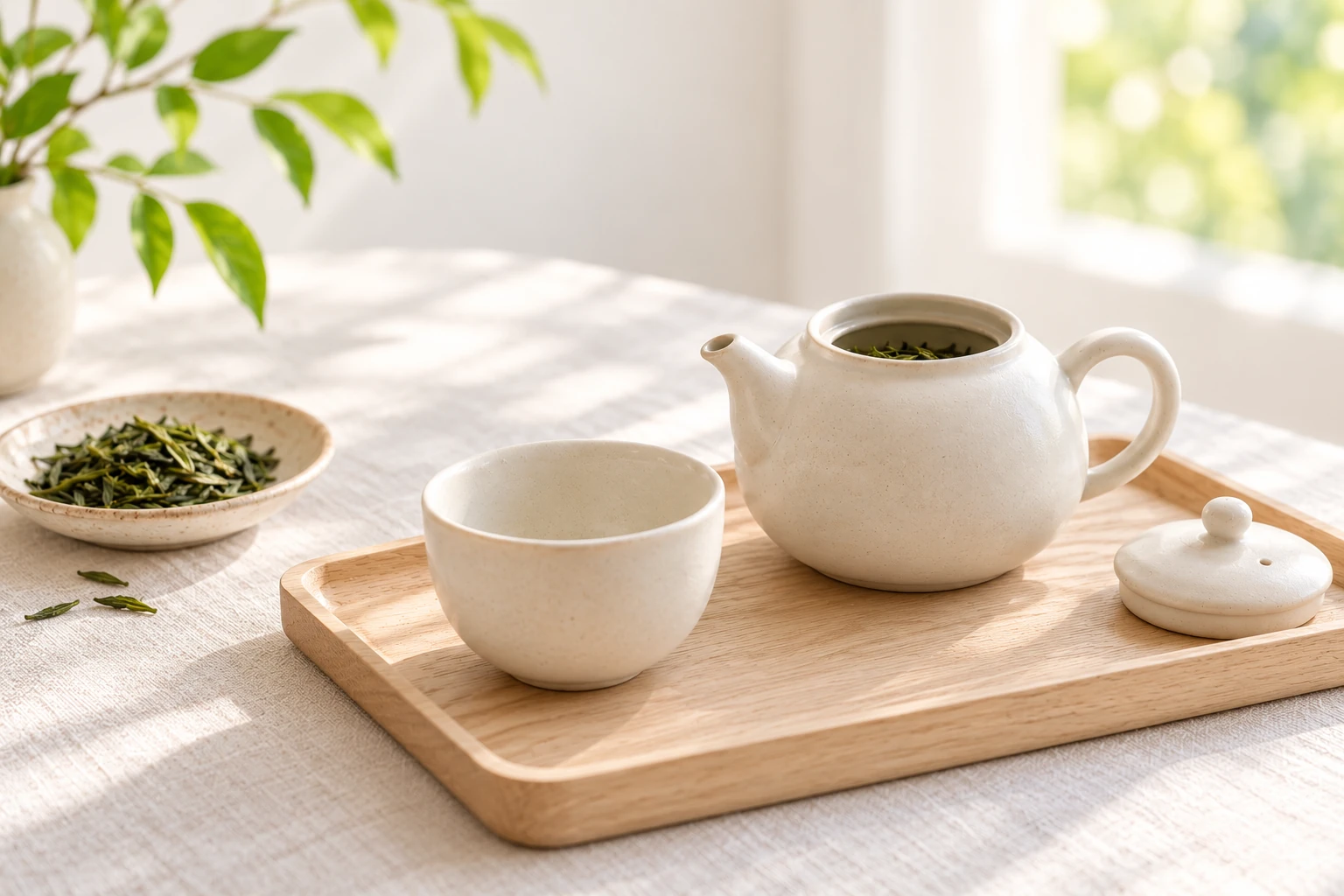
- Rinse as instructed. Put the pot and receiving cup on a stable tray.
- Use room-temperature water for the first handling check. Fill to a comfortable level below the lid and measure that amount with a suitable jug or scale.
- Hold the handle naturally and secure the lid as the design requires. Pour slowly into the cup. Notice whether your wrist position is comfortable and whether the cup has enough capacity.
- Empty the pot and look for places where water remains. Let it dry according to the maker's directions.
- For the first tea brew, follow the tea's recipe. Watch the flow while decanting, and inspect the filter afterwards for trapped leaves.
A cold-water handling check does not prove how a hot, leaf-filled pot will perform. It lets you learn the grip and serving volume before adding heat. Keep the first hot brew manageable.
What if fine leaves slow the pour?
Check the filter for residue and confirm that the tea and dose suit the pot. Avoid forcing leaves through the filter or scraping fixed mesh with a sharp object. Follow the maker's cleaning method. Fine particles in the cup can be part of a deep-steamed tea; a perfectly clear drink is not the only reasonable result.
If you dislike sediment, ask about a finer suitable filter before replacing the entire pot. If you dislike emptying loose leaves from a fixed filter, a removable basket may address your actual inconvenience more directly.
Keep the first purchase simple enough to learn from. After several ordinary brews, you will have useful observations about capacity, handling and cleaning. Those observations are a better basis for a second pot than an unsupported promise of better flavour.
Related guide: How to Clean a Kyusu Teapot: Glazed vs Unglazed.
Related guide: How to Measure Teapot Capacity for Brewing Tea.
Original editorial illustration.

No comments:
Post a Comment