
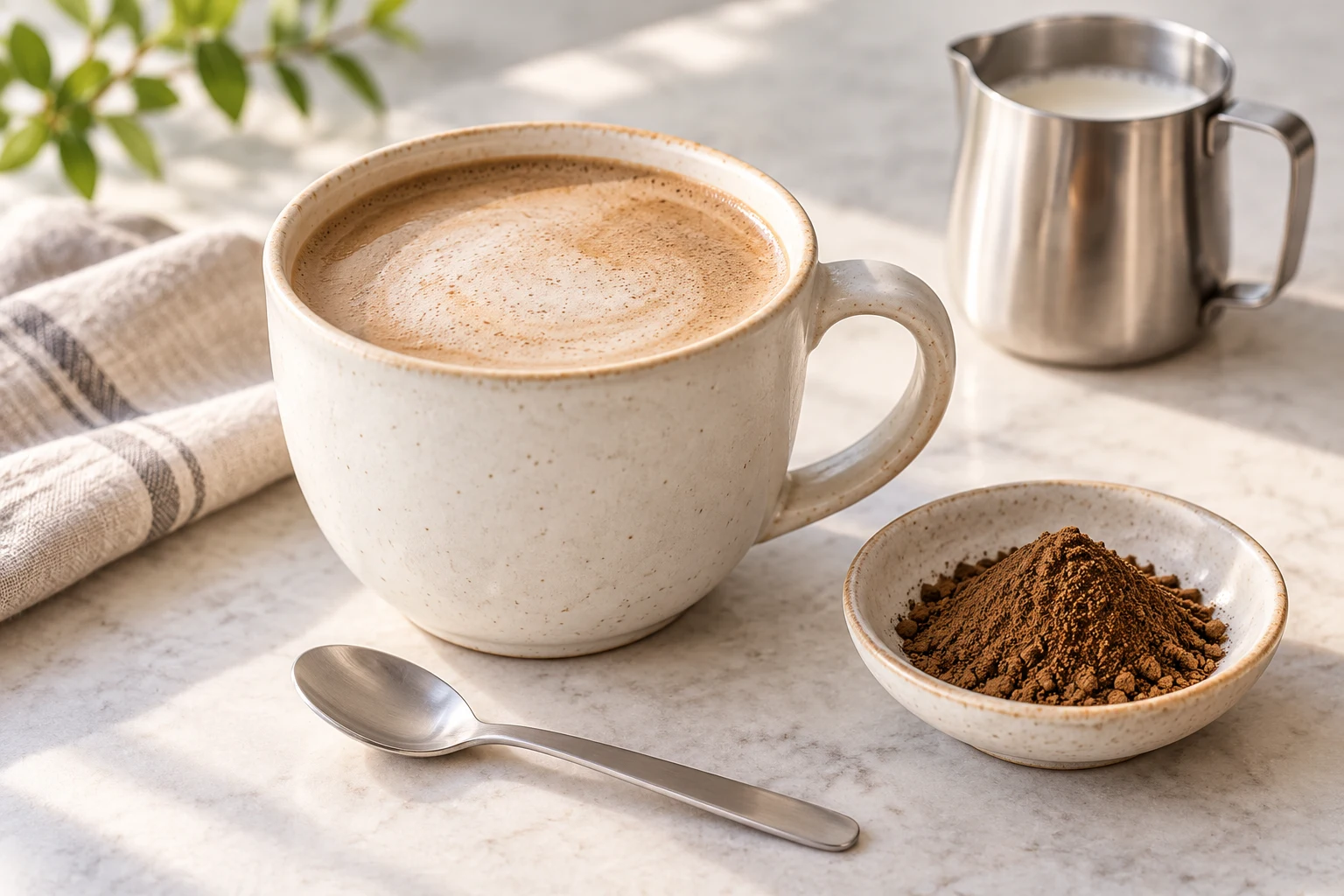
To make a hojicha latte with powder, mix the roasted tea with a small amount of hot water before adding warmed milk. Hojicha Co.'s recipe uses one teaspoon of its powder, 60 ml of water at 80°C and 180 ml of milk. Treat that as a recipe for that product, then follow your own packet if its directions differ.
I would start with a small packet of unsweetened hojicha powder and the milk already in your fridge. Buying special equipment before you know whether you like the roasted flavor is unnecessary. If you already have loose-leaf hojicha, use a leaf-based recipe instead; the powder method below is not a teaspoon-for-teaspoon substitution.
Choose powder intended for drinks
Read the ingredients before buying. Pure ground hojicha and an instant latte mix containing sugar or milk powder are different starting points. A premix needs its own directions, or you may accidentally add a second serving of sweetener and milk.
The brown color comes with this roasted-tea style; it should not look like a bright green matcha latte. The cover is an illustration of the drink, not evidence of a tasting or a tested brand. For the basic tea distinction, see what hojicha is.
Ingredients and equipment for one cup
| Item | Starting amount | Check |
|---|---|---|
| Hojicha powder | 1 teaspoon | Use the maker's dose; teaspoon weights vary. |
| Water | 60 ml at 80°C / 176°F | Measure before mixing. |
| Milk | 180 ml, warmed | Leave space in the mug for foam. |
| Sweetener | Optional | Taste before adding more. |
| Mixing tool | Spoon, whisk or frother | Use a vessel deep enough to contain splashes. |
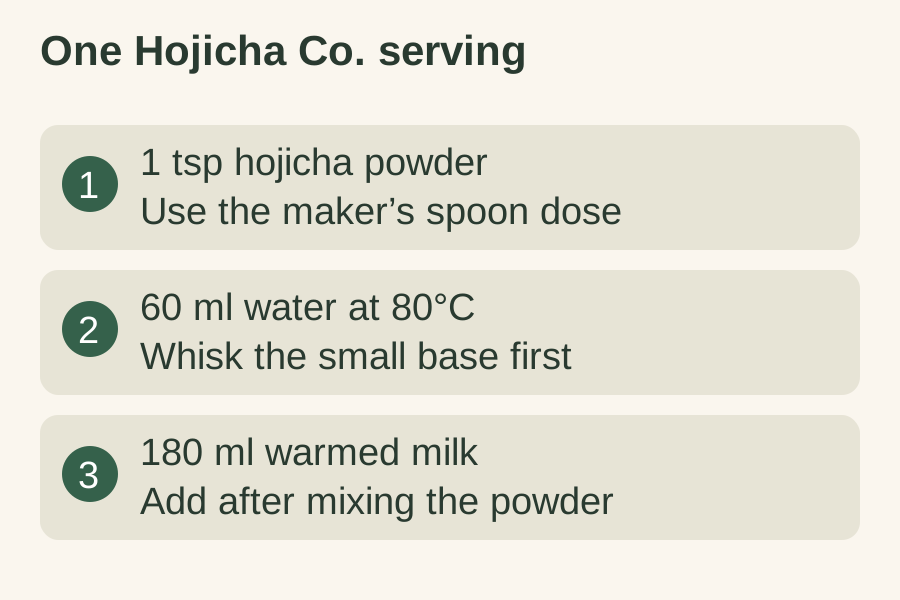
The recipe totals 240 ml of liquid before foam and any sweetener. A mug filled to the brim with 240 ml of water would therefore be too small for comfortable mixing and serving. Choose one with extra room. The teaspoon measurement is not a promise that every powder weighs the same; note your own measured dose if you use a scale.
Make the latte step by step
- Measure the powder into a small bowl or suitable mug. Break up obvious dry clumps before adding liquid.
- Add the measured hot water. Stir or whisk this small base thoroughly, checking the bottom and corners for pockets of dry powder.
- Warm the milk using a method appropriate for your equipment. If you want foam, froth it separately with room for expansion and splashes.
- Pour the milk into the mixed tea base. Stir so the first sip is representative of the whole cup rather than a separate layer.
- Taste before adding sweetener. If you use it, add a measured amount and record that amount with the milk type.
Hojicha Co.'s preparation guide demonstrates a spoon, a handheld frother and a bamboo whisk. Its spoon method is useful for deciding whether you like the drink before buying a whisk. Ground tea can leave some fine sediment; the aim here is to avoid dry lumps, not to promise a perfectly clear solution.
Adjust the next cup without losing the recipe
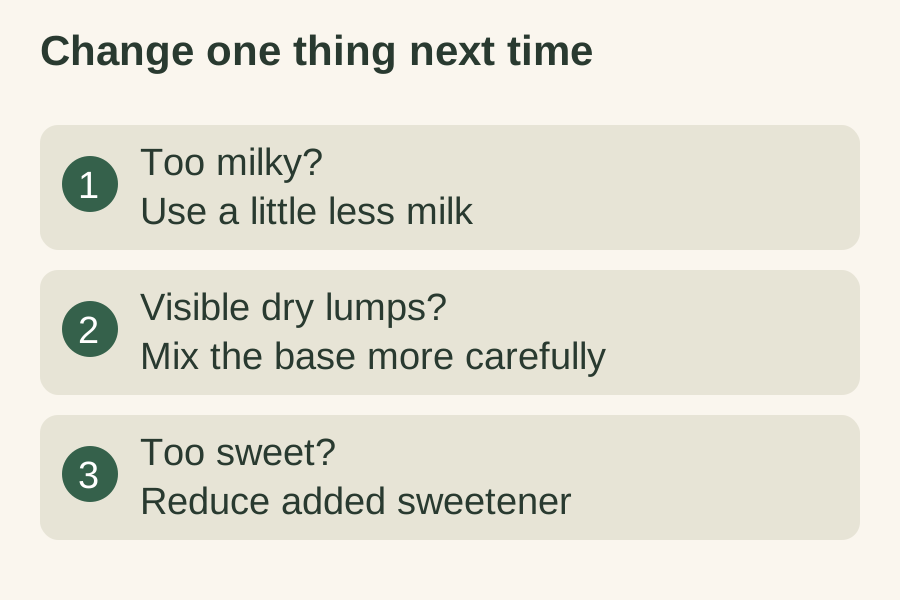
Keep one short note: powder brand and dose, water amount, milk type and amount, and sweetener. Then change only the thing most likely to explain your complaint. If the milk hides the tea, I would try slightly less milk before increasing the powder and changing the sweetener at the same time.
For an explicitly hypothetical practice note: “One teaspoon powder, 60 ml water, 180 ml milk. The cup tastes mostly of milk. Next time keep the tea base unchanged and try 150 ml milk.” That is a proposed comparison, not an author tasting result. If your smaller cup is still unappealing, another powder or a plain brewed hojicha may suit you better.
Dry lumps call for a mixing correction. More syrup can make a lumpy cup sweeter without improving its texture. When foam disappears quickly, judge the drink separately from the foam: different milks and frothing methods behave differently.
Keep leaf brewing and powder mixing separate
The producer's brewing page also gives a loose-leaf option. Leaves must be brewed and strained; powder stays in the drink. Using the same spoonful of each would not make a controlled comparison.
If you later buy a bamboo whisk, keep it clean and dry with the whisk care guide. For a first cup, accurate measuring and careful mixing are more useful than elaborate foam or a large collection of accessories.
Original editorial illustration; not a photograph of a tested recipe.

No comments:
Post a Comment