
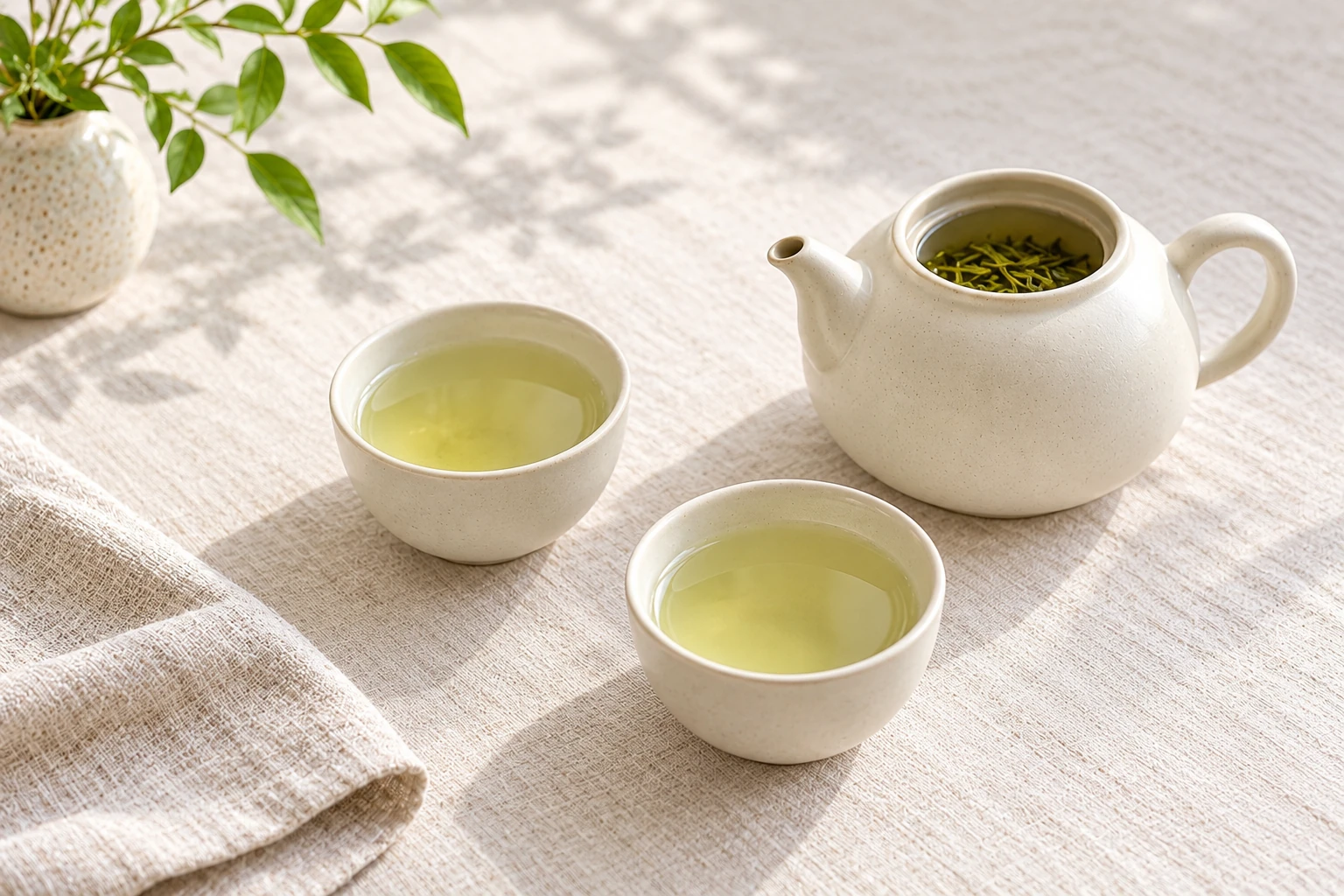
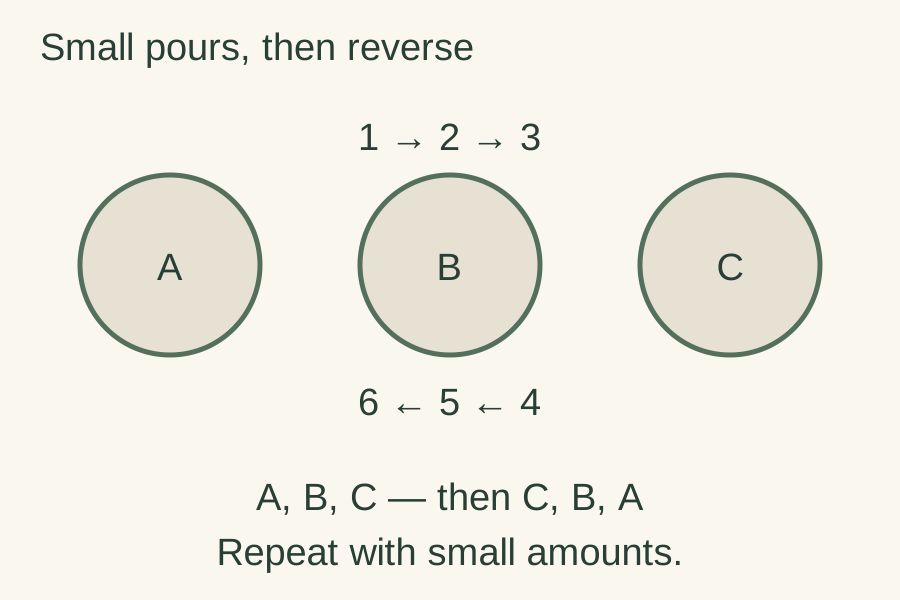
For several cups of green tea from one pot, pour a small amount into each cup, then reverse the order and repeat. With three cups, use A, B, C, then C, B, A. This shares the changing strength of the pour more evenly than filling the first cup completely before starting the next.
I would use this method for two or three similar cups on a tray. For a larger group, a serving pitcher is easier: decant the tea into it first, then divide the combined brew. Either approach gives you a more consistent starting point than trying to correct an uneven first cup afterward.
Why pouring order changes the result
Tea continues to extract while liquid remains with the leaves. A pot's first and last portions need not taste identical, especially when pouring takes time. Sharing small portions across the cups distributes those differences. It also makes it easier to notice that one cup is getting more liquid than another.
Japan's Ministry of Agriculture tea guide calls this alternating pour mawashitsugi. Its example uses three cups and a forward-and-back sequence. It advises draining the pot so water left with the leaves does not continue extracting before the next infusion.
Set up before the tea is ready
| Situation | Useful method | Check first |
|---|---|---|
| Two or three similar cups | Small pours, reversing the order each pass. | Keep the cups close together on a stable tray. |
| Cups of different sizes | Measure equal servings rather than equal fill heights. | A wide cup can look emptier while holding more. |
| More cups than you can pour comfortably | Decant into a serving pitcher first. | The pitcher must hold the whole infusion with room to pour. |
| Not enough tea for everyone | Reduce serving size or plan a producer's sharing recipe. | Do not overfill the teapot to make it reach. |
Pour three cups step by step
- Arrange the cups on a stable tray within comfortable reach. For a first comparison, use matching cups so fill levels are useful guides.
- Check how much tea the pot can actually deliver. If you expect 180 ml of brewed tea, three equal portions would be 60 ml each. That is a serving example, not a leaf-to-water recipe.
- Brew according to the packet. Keep the tea, water amount, temperature and steeping time unchanged while learning the pouring method.
- Pour a little into A, then B, then C. Reverse the sequence: C, B, A. Continue with small portions rather than filling a cup in one go.
- Drain the remaining tea among the cups without shaking the pot forcefully. Use the teapot as designed and keep hot liquid away from fingers.
- Compare the amounts and taste when comfortably cool. If one cup is consistently stronger, shorten the transfer time and use smaller alternating portions next time.
Do not judge equal volumes by color alone. Different glazes, lighting and cup shapes can make the same tea look different. If the amounts are hard to judge, practice the sequence with cool water before using hot tea.
Use a pitcher when the group grows
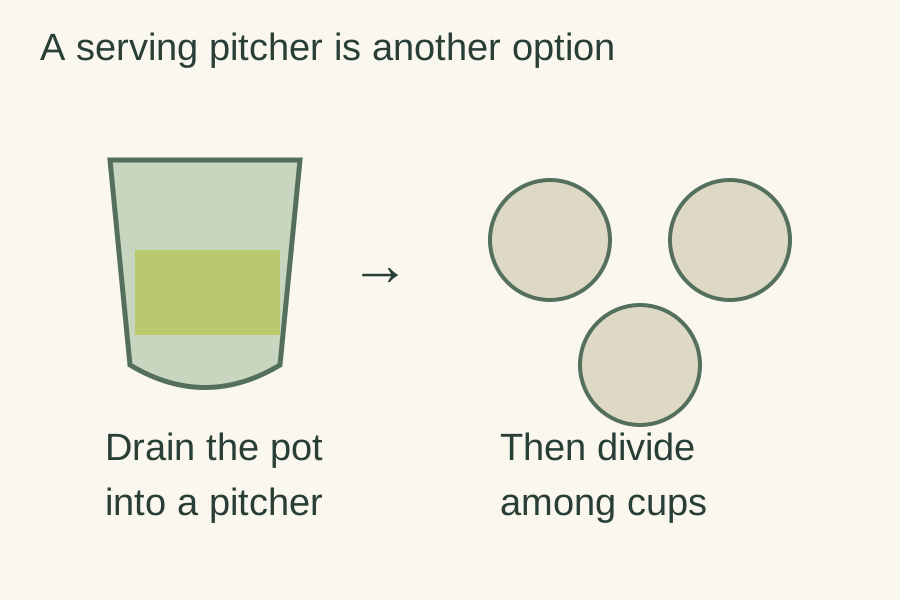
A pitcher lets you collect one infusion before serving it. Choose a heat-suitable vessel with a controllable spout and enough space for the whole brew. Pour out the tea, then distribute it. This also helps when the cups differ in shape and passing the teapot repeatedly feels awkward.
Ippodo's sharing recipe goes further, combining several infusions in a pitcher. That is a specific brewing method with its own quantities and timings. Follow that recipe if you choose it; simply combining random leftover brews is not the same procedure.
Make one useful comparison
For an explicitly hypothetical practice note: “Three matching cups, same packet recipe. Cup A received too much during the first pass. Next time use smaller first pours and keep the tea recipe unchanged.” The note identifies a controllable action without inventing tasting vocabulary or blaming the leaves.
If the pot cannot deliver the servings you planned, start with measuring your teapot's usable capacity. For another round with the same leaves, use the second-infusion guide and change the brewing conditions deliberately. A more even pour helps compare cups; it does not require every infusion to taste identical.
Original editorial illustration.

No comments:
Post a Comment