
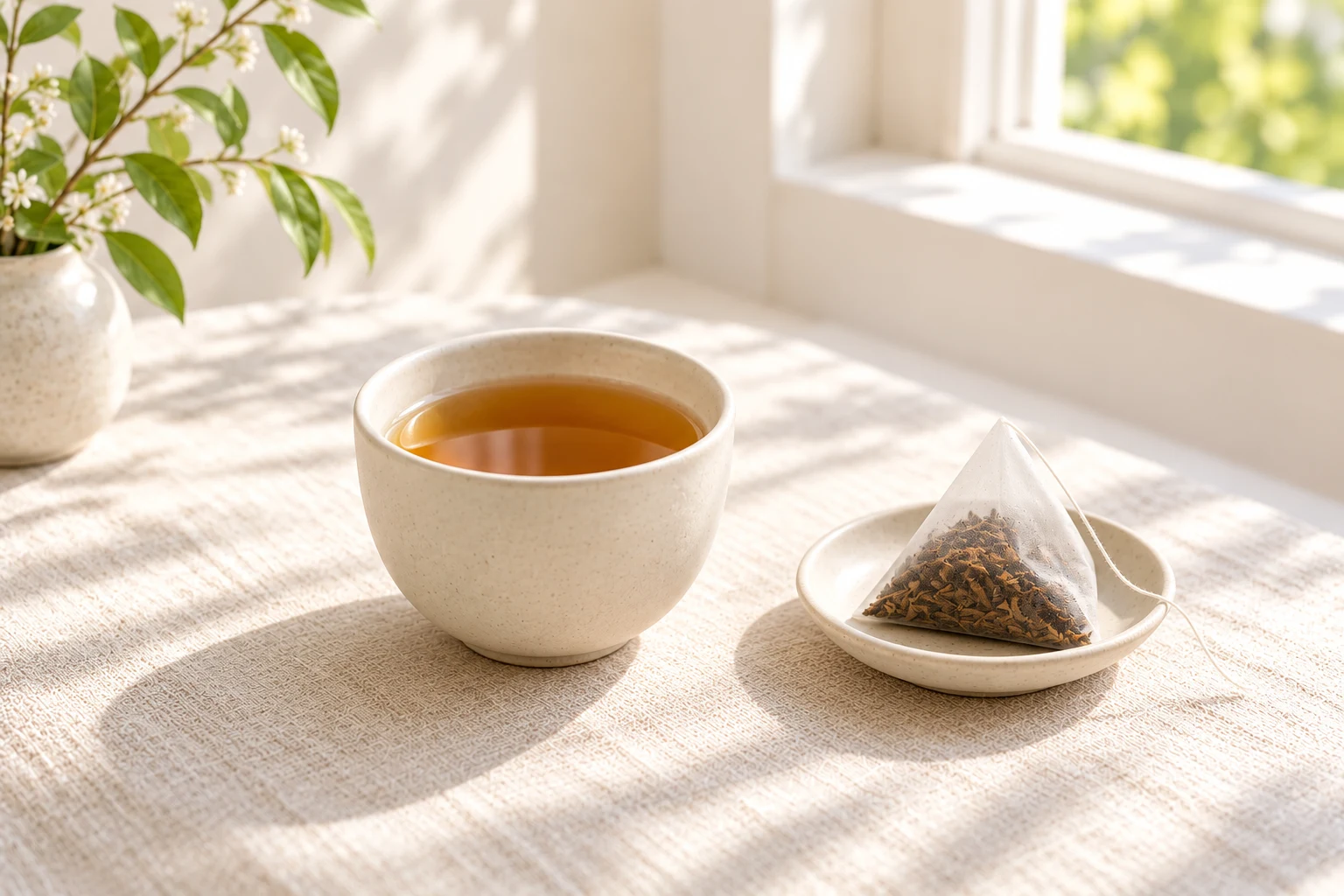
Start hojicha tea bags with the directions for your exact packet, including its intended water volume. A one-cup bag may be designed for a much smaller serving than a large breakfast mug. Measure your first cup, time the infusion and adjust one variable on the next brew.
For a concrete starting point, Ippodo's one-cup hojicha bags specify one bag for 5 US fluid ounces, roughly 148 mL. Its hot-brew directions call for boiling water and a one-minute wait, with movement of the bag to reach the desired strength. Use those instructions for that product; another maker's bag may contain a different amount or cut of tea.
Check the cup size before changing the steep
I would measure the water once with a kitchen measuring jug and learn where that amount reaches in my usual mug. You can then repeat it without measuring every morning. A mug's advertised capacity normally describes its total size; the amount you actually pour is what matters here.
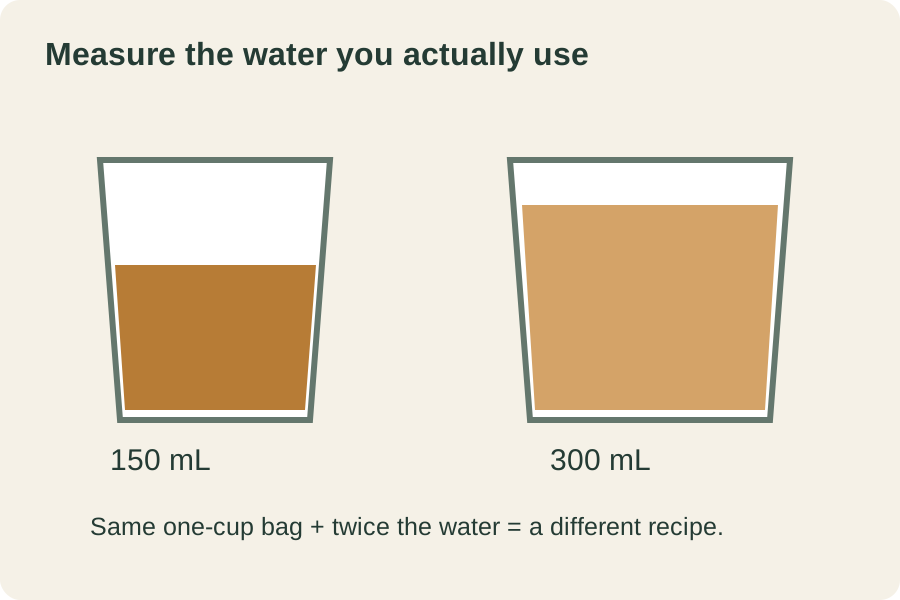
In a practice example, a packet calls for about 150 mL and you fill a mug with 300 mL. You have doubled the water while keeping the same bag. Before extending the steep several minutes, try the packet's water amount once. That gives you a reference for deciding whether you want a larger serving, a stronger cup or simply a different tea.
Brew a first cup you can repeat
- Read the packet for bag count, water amount, temperature and time. Check whether it is a one-cup bag or a larger bag intended for a teapot.
- Put the bag in a heat-safe mug with enough room for the measured water. Keep the mug on a stable surface while pouring.
- Add the specified water and start the timer. With the Ippodo example above, this means boiling water and one minute; it is not a rule for every green tea.
- Follow any instruction to move the bag. Note whether you did so, because changing the movement between cups makes a comparison harder to interpret.
- Lift the bag onto a saucer when you reach your chosen strength. Let the drink cool enough to taste safely.
- Write a short note: water amount, time and what you would change. “Too light at 300 mL” is more useful for the next cup than “bad tea.”
Choose one adjustment
| What happened | Check first | One next trial |
|---|---|---|
| The cup tastes too light | Did you exceed the packet's water amount? | Repeat at the stated volume |
| The cup is stronger than you want | Did the bag remain in while you drank? | Remove it at the timed endpoint |
| You want a full large mug | Is this a one-cup or teapot-size bag? | Choose a bag or bag count intended for that volume |
| The second attempt differs | Were volume, timing and bag movement consistent? | Repeat your written recipe once |
| The drink is unpleasantly hot to assess | Have you allowed it to cool? | Taste after cooling before changing the recipe |
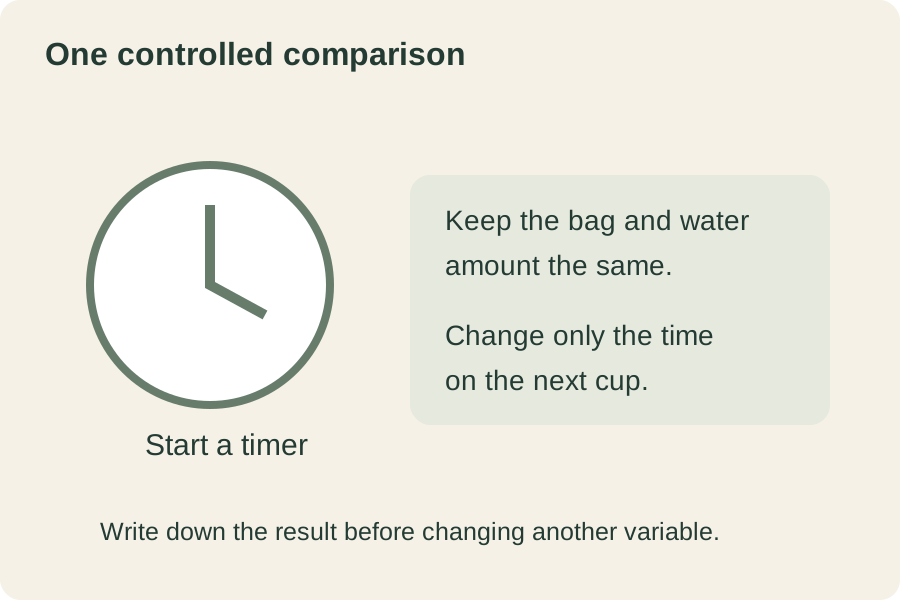
When the serving size already matches the packet, I would adjust the time in a small step and write it down. Keep the water amount and bag movement unchanged. A longer steep may suit your preference, but it should be a deliberate comparison instead of compensation for an unknown mug size.
How many bags for a larger mug?
Use the maker's larger-serving instructions where available. If the only guidance is one bag for about 150 mL, two bags in about 300 mL preserve that starting bag-to-water ratio mathematically. That is a recipe trial, not a guarantee of identical flavor: the mug, cooling and room around the bags can differ.
For a first purchase, I would buy a small pack and check the recommended serving before committing to a large box. If you always drink a large mug, a product explicitly sized for that serving is easier to repeat. Do not assume that an individual wrapper means the bag is sized for any cup.
Keep a three-line brewing note
Try this filled practice example: “One bag; 150 mL; packet temperature. One minute; bag moved as directed. Next time: same recipe, then decide whether to extend the time slightly.” Replace the final line with your own observation after tasting. The example records a method and does not invent a tasting result.
If you are choosing between formats, read tea bags versus loose leaf. For a milk drink, use the separate hojicha powder latte guide; powder quantities do not translate directly into bag counts.
Original editorial illustration.

No comments:
Post a Comment